1941 West Fort St

Detroit, MI 48216

313-496-0550

Mon - Fri 8:45 a - 4 p ET

Porter Bottle Company

Top Container and Packaging Suppliers for Global Buyers?

Choosing a packaging supplier is not just a price comparison. Global buyers must match container formats, materials, production capacity, and delivery schedules to real product needs. A glass jar may protect a specialty food, while a lightweight pouch can reduce shipping volume. The right choice depends on the product, handling conditions, and customer expectations.

This guide examines containerandpackaging suppliers through practical questions buyers can verify. Can the supplier provide consistent samples? Are dimensions, closure fit, and material specifications documented clearly? Ask about production lead times, quality checks, minimum order quantities, and how defects are handled. Small details matter. A cap that loosens during transit can undermine an otherwise sound package.

Supplier claims deserve careful review. Request current certifications where relevant, confirm what each certification covers, and check references or arrange a production-site assessment when feasible. Sustainability language also needs specifics: recycled content, material type, and available end-of-life options should be stated plainly. No supplier is the best fit for every buyer. Even a strong sample may not represent a full production run; that is worth remembering. Comparing written specifications, test results, and trial-order performance offers a more reliable basis for shortlisting suppliers than polished brochures alone.

Top Container and Packaging Suppliers for Global Buyers?

Market Scope: Packaging Generated 40% of Plastic Waste in 2019 (OECD)

The OECD reported that packaging generated 40% of plastic waste in 2019. That figure makes packaging a sourcing decision, not just a cost line. For global buyers, supplier comparisons should include material weight, recycled content, and what happens after use. A light pouch may cut shipping volume, yet still be difficult to sort locally.

Ask suppliers for each package’s material specification, unit weight, and evidence behind recycled-content claims. Request samples and run a basic handling test: stack filled cartons, check seals after transit, and record damage. Small differences matter. A thinner wall can save resin, but if it causes leaks or breakage, the claimed benefit may disappear.

Waste systems differ by destination, so a package that is recyclable in one market may have no collection route in another. Discuss mono-material options, clear labeling, and reuse trials where practical. Data can be incomplete, and supplier declarations are not the same as independent verification. Buyers should document assumptions, then revisit them as local collection and sorting improve.

Product Types: Rigid Containers, Flexible Packs, and Transport Packaging

Rigid containers suit products that need shape retention, impact resistance, or a dependable closure. Glass, metal, and molded containers each behave differently during filling and shipping. Check wall thickness, cap fit, and compatibility with the contents. A sample filled and dropped from a realistic handling height can reveal weak points. Small details matter.

Flexible packs, including pouches and film wraps, can reduce shipping weight and fit varied product shapes. Their barrier performance should match the product’s sensitivity to moisture, oxygen, or light. Ask suppliers for technical data and seal-test results, then trial the pack on your filling line. A film that performs well in a lab may wrinkle or seal unevenly at production speed. That part is easy to underestimate.

Transport packaging protects goods across repeated handling, not just one warehouse trip. Corrugated cases, reusable crates, pallets, cushioning, and stretch wrap may all play a role. Confirm case strength, pallet dimensions, and stacking limits against the actual load. Consider humidity, vibration, and loading methods on the route. I would not assume the lightest option is automatically the most efficient; damage and repacking can erase its savings. Sample shipments help, though they cannot reproduce every transit condition.

Leading Suppliers: Amcor, Berry Global, Smurfit Westrock, Crown, and Mauser

Global buyers often compare leading suppliers across flexible films, rigid plastic containers, paper-based packaging, metal cans, and industrial drums. Each format solves a different problem. A lightweight pouch may reduce shipping weight, while a steel can can handle rough transport. Scale matters, but so do nearby plants, backup capacity, and consistent quality records. A polished sustainability brochure is not proof.

Material choices deserve close review. The OECD’s Global Plastics Outlook (2022) estimates that 9% of plastic waste was recycled worldwide in 2019. This covers all plastic waste, not packaging alone.

Buyers should request evidence for recycled content, resin composition, and end-of-life guidance. Ask for test results on seal strength, drop resistance, and coating compatibility. Compare suppliers on landed cost, lead time, minimum order quantities, and documented quality systems. Small differences add up.

Tips: Request samples and test them on your actual filling line. Check dimensions after storage, not just on delivery. Confirm who owns the tooling and how defects are investigated. Supplier claims can be difficult to compare without a shared measurement method.

Global Goods Trade: Over 80% Moves by Sea (UNCTAD)

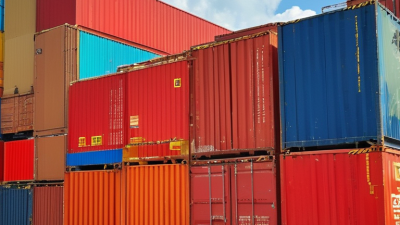
More than 80% of global trade by volume moves by sea, according to UNCTAD’s Review of Maritime Transport 2024. For buyers, that makes packaging part of freight planning, not a finishing touch. A carton may spend weeks in a humid container, endure repeated handling, and then enter a crowded warehouse.

Small choices matter.

Corrugated strength, pallet fit, moisture barriers, and clear handling marks can help limit damage and wasted space. Yet heavier protection also adds material and shipping weight. The right balance depends on the route, cargo, and storage time.

UNCTAD reported that maritime trade reached 12.3 billion tonnes in 2023, showing the scale of goods moving through ports. The World Bank’s Logistics Performance Index 2023 identifies customs, infrastructure, shipment tracking, and timeliness as connected logistics factors.

Global buyers can ask suppliers for test records, material specifications, and dimensions in consistent units. Ask how samples performed after compression, vibration, and moisture exposure—not only how they look on a clean desk. A specification can look complete and still miss a rough transfer.

That uncertainty deserves honest discussion.

Supplier Evaluation: Compare Capacity, Compliance, Lead Times, and Total Cost

A supplier’s stated capacity matters only when it matches your order pattern. Ask how many shifts run, what output is already committed, and whether a second production line is available. A sample run can reveal more than a polished presentation: inspect seal consistency, wall thickness, print alignment, and carton strength. Numbers need context.

Compliance should be checked against your product, destination, and packaging materials. Request current test reports, material specifications, and batch traceability records, then confirm that the documents cover the exact item being quoted. Ask for evidence. A certificate for a similar container may not apply. I have seen buyers overlook this distinction when several sizes share one product name.

Compare lead times by stage, not as one broad estimate. Separate tooling, sample approval, production, inspection, and shipping, and ask what could delay each step. Total cost should include setup charges, freight, duties, quality checks, storage, and the cost of rejected units. A low unit price can become expensive after a late shipment or inconsistent batch. Still, no scorecard captures every disruption; forecasts change, and buyers sometimes provide final artwork later than planned. Keep assumptions visible, and request written updates when dates or specifications shift.

Top Container and Packaging Suppliers for Global Buyers? — Supplier Evaluation: Compare Capacity, Compliance, Lead Times, and Total Cost

Comparison basis: The entries below describe supplier types, not named or verified companies. Capacity, certifications, lead times, and prices vary by site, product specification, order size, and destination. Confirm all supplier-specific figures with current documents and quotations.

Supplier Type Typical Products Capacity to Verify Compliance Checks Lead-Time Factors Total-Cost Factors Best Fit for Global Buyers
Corrugated Packaging Manufacturer Shipping boxes, cartons, protective inserts, and display packaging made from corrugated board. Request output by plant and product type, available board grades, converting-line capacity, peak-season allocation, and backup-site options. Check packaging specifications and test reports. For fiber sourcing claims, verify the applicable chain-of-custody certification and product scope. Confirm any destination-specific recycled-content or labeling rules. Depends on board availability, printing and die-cutting requirements, tooling, order volume, and transport distance. Confirm sample approval and production-slot dates. Compare unit price, tooling, print setup, palletization, freight, storage, damage rates, and the effect of box dimensions on shipping costs. Buyers shipping e-commerce orders, consumer goods, or industrial products that need protective outer packaging.
Flexible Packaging Converter Films, pouches, bags, sachets, and rollstock made from plastic, paper, or material combinations. Verify compatible materials and structures, printing and lamination capacity, minimum order quantities, and available production lines. For food-contact packaging, request declarations and migration documentation applicable to the destination market and intended use. Check whether any recyclability or recycled-content claims are substantiated. Depends on material sourcing, artwork approval, printing method, laminate curing where applicable, and testing. Confirm whether the quoted schedule includes pre-production samples. Include material weight, print cylinders or plates, minimum order quantities, barrier performance, filling-line compatibility, freight, and end-of-life requirements. Buyers needing lightweight packaging, flexible pack formats, or packaging designed for specific barrier and shelf-life needs.
Rigid Plastic Packaging Producer Bottles, jars, tubs, caps, closures, and other molded containers. Check molding process, mold availability and ownership, cavity capacity, resin options, output by site, and ability to support demand changes. Confirm food-contact or other regulated-use documentation for the exact resin, colorants, additives, and intended market. Request quality-system certificates and product-specific test records where relevant. Depends on mold design or modification, resin supply, color matching, qualification testing, and production scheduling. Separate initial tooling timelines from repeat-order timelines. Assess tooling and maintenance, resin-price adjustment terms, unit cost, closure compatibility, pallet density, freight, breakage or defect rates, and recycling requirements. Buyers needing durable, lightweight containers with specified shapes, closures, or dispensing features.
Glass Container Producer Bottles and jars for food, beverages, cosmetics, and other applications. Ask about plant-level furnace and forming availability, mold capacity, color options, production allocation, and minimum runs. Obtain written confirmation for the required format. Verify applicable food-contact documentation, product specifications, and quality controls. Check whether recycled-content claims are supported for the products being quoted. Can be influenced by mold requirements, production campaigns, color changes, inspection, and heavy-goods transport. Confirm availability of the exact format and finish. Compare container price, mold costs, weight, protective packaging, freight, breakage, warehousing, and any return or refill logistics. Buyers whose product protection, appearance, or use case calls for a rigid glass container.
Metal Packaging Producer Steel or aluminum cans, pails, tins, closures, and selected aerosol or specialty containers. Confirm metal type and gauge, available sizes, coating and printing capability, line capacity, tooling, and site-level order allocation. Request material and coating documentation relevant to the contents and destination market. Verify applicable food-contact requirements and performance-test records. Depends on format availability, tooling, coatings, printing, qualification tests, and transport. Check whether the supplier can meet delivery windows across multiple regions. Include metal-price adjustment mechanisms, coatings, printing, tooling, transport, protective handling, and container performance requirements. Buyers requiring strong, stackable containers or packaging suited to particular product and filling processes.
Packaging Distributor or Multi-Material Supplier Multiple packaging formats sourced from one or more manufacturing sites; may also provide warehousing or customization. Verify which products are made in-house versus subcontracted, the actual manufacturing sites, allocation rights, stock commitments, and continuity plans. Check certificates and regulatory documents against the specific factory and product—not only the distributor. Traceability should cover the relevant supply chain. May depend on inventory, upstream factories, consolidation, customs clearance, and regional distribution. Confirm stock status and replenishment commitments in writing. Compare product prices with service fees, warehousing, minimums, freight, duties, inventory carrying costs, and the value of consolidated purchasing. Buyers seeking a consolidated supplier relationship or regional stock support across several packaging categories.
Evaluation Method Compare equivalent specifications: material, dimensions, tolerances, decoration, closure, packing method, and intended use. Request recent output and utilization data, site-specific capacity, peak-period availability, and a documented contingency plan. Validate current certificates, scope, issuing body, facility address, expiry date, and product-specific declarations. Standards such as ISO 9001 relate to quality management; they do not by themselves certify a product for a particular regulated use. Request separate schedules for samples, tooling, first production, repeat orders, and delivery. Confirm Incoterms, shipping route, and customs responsibilities. Total landed cost should include unit price, setup or tooling, freight, duties, inspection, storage, expected waste, and quality-related costs. Use a weighted scorecard based on the buyer’s priorities, then audit the shortlisted manufacturing site and approve production samples before placing a large order.
Scroll to Top