How to Buy Honey Jars in Bulk for Your Business
Buying honey jars in bulk can lower packaging costs, but the cheapest quote is rarely the complete answer. A business must compare glass quality, jar capacity, closure performance, labeling space, and shipping conditions. One cracked carton can erase a small purchase saving. That lesson is easy to overlook.
This guide explains how to evaluate honey jars bulk suppliers with practical business needs in mind. Start by requesting samples, product specifications, and clear photographs of the jar neck and lid. Check whether the glass feels consistent and whether each closure seals evenly. Pour honey into several samples, then store them upright for a few days. Watch for leaks, sticky threads, or loose caps. Small tests reveal problems early.
Supplier reliability matters as much as appearance. Ask about minimum order quantities, production schedules, replacement policies, and packaging for freight. A reputable manufacturer should explain material options and provide documents supporting food-contact suitability where applicable. Independent reviews and trade references can add useful evidence, although they are not perfect. I would still verify every important claim. Numbers can be misunderstood.
Think beyond the first shipment. Measure warehouse space, pallet dimensions, seasonal demand, and expected breakage. Amber glass may protect light-sensitive products, while clear glass can display honey’s color more effectively. Neither choice fits every brand. A thoughtful purchasing decision balances presentation, safety, durability, cash flow, and customer expectations. The right supplier is not simply the one with the lowest unit price. It is the one that performs consistently when your order becomes large.
Define Jar Demand with USDA Honey-Production and Sales Data
Buying honey jars in bulk should begin with demand, not a pallet-size discount. USDA’s National Agricultural Statistics Service reported about 139 million pounds of U.S. honey production in 2023. The report also listed roughly 2.6 million producing colonies and an average yield near 53 pounds per colony. These figures reveal supply pressure, but they do not predict your exact jar sales.
Use your own sales records beside USDA data. Track weekly units, jar sizes, refill rates, seasonal peaks, and damaged inventory. USDA NASS also reports producer prices and total honey value, helping you judge whether rising costs may affect purchasing decisions. A small shop selling 300 jars monthly should not automatically order 3,000 jars. Storage space, cash flow, and customer traffic can change quickly. My forecast would include a modest safety stock, perhaps 10% to 15%, then review it monthly. That assumption may still be wrong.
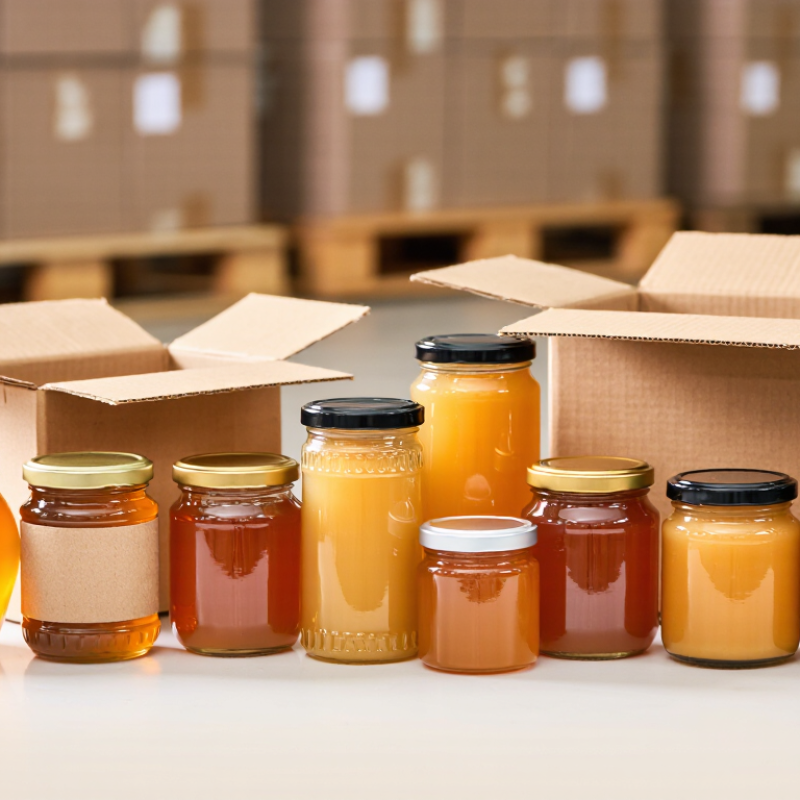
Tips: Convert projected honey volume into jar counts before contacting suppliers. For example, 600 pounds of honey fills about 1,814 eight-ounce jars, before production loss. Check closure fit, food-contact documentation, case quantity, shipping damage, and lead time. Record breakage by shipment. USDA reports are authoritative, but they describe national conditions, not your neighborhood. Pair them with point-of-sale data and local sales patterns. Sources: USDA NASS, Honey, published 2024; USDA NASS, Agricultural Prices, 2023.
Set Jar Capacity, Glass Type, and Food-Contact Specifications
Choosing the right jar capacity is the first practical decision for a honey business. A 250-gram jar suits gift boxes and small households. A 500-gram jar often works better for regular kitchen use. Larger jars may reduce packaging costs, but they can feel heavy and awkward on narrow shelves. Measure your honey filling equipment before ordering. A few millimeters can affect the entire packing process.
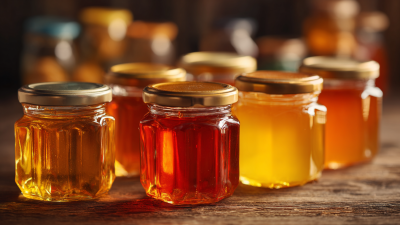
Glass type also deserves careful attention. Clear glass displays honey color, texture, and crystallization clearly. Amber or tinted glass offers stronger light protection, but it changes the product’s appearance. I once assumed that thicker glass always meant better quality. That was too simple. Thick glass can improve impact resistance, yet it may increase shipping weight and costs. Compare wall thickness, closure fit, pallet strength, and breakage records with actual samples.
Food-contact specifications should be confirmed in writing. Ask for declarations of compliance, material information, migration test results, and recommended temperature limits. The jar, lid, liner, and seal must be assessed as one packaging system. A suitable jar alone is not enough. Check whether the inner coating is compatible with honey’s acidity and long storage periods. Requirements vary by selling region, so verify current local standards with a qualified compliance professional. Request production samples before placing a bulk order. Fill them, seal them, stack them, and inspect them after transport. Small flaws appear quickly.
Calculate Landed Cost Using Freight, Pallets, Breakage, and Taxes
How to Buy Honey Jars in Bulk for Your Business
Landed cost is more than the supplier’s jar price. In purchasing reviews, I track freight, pallets, insurance, destination fees, duties, and taxes separately. A low unit quote can become expensive after arrival. Request the carton dimensions, gross weight, pallet count, and stacking limits before ordering. Those details determine the freight class and warehouse space.
For example, 2,400 jars priced at $0.62 cost $1,488 before shipping. Add $760 for freight, $96 for pallets, $28 for insurance, and $185 for destination handling. If duty and tax add $349, the shipment reaches $2,906. A three percent breakage rate leaves about 2,328 sellable jars. The effective landed cost becomes roughly $1.25 per jar, not $0.62.
Breakage needs a realistic estimate. Use your past receiving records, not a convenient guess. Thin glass, weak dividers, and rough transfers can change the result. I once underestimated pallet damage because the outer cartons looked fine. Several jars were cracked inside. That mistake affected pricing. Include disposal, inspection labor, and replacement packaging when calculating loss. Taxes also require care. Recoverable sales tax may affect cash flow, but not your final business expense. Confirm the taxable base, tariff classification, and import documents with a qualified customs professional. Keep one worksheet for quoted cost and another for actual invoice results. Reality is usually less tidy.
How to Buy Honey Jars in Bulk: Landed Cost per Sellable Jar
Illustrative bulk-order calculation for 1,000 glass honey jars with lids. The calculation assumes 980 sellable jars after a 2% breakage reserve.
Order quantity
1,000 jars
Sellable quantity
980 jars after 2% breakage
Total landed cost
$759.06 per shipment
Landed cost per sellable jar
$0.77
The example includes jar and lid cost, secondary packaging, freight, pallet handling, a breakage reserve, import duty, and a 7% tax assumption. Actual freight, duty, and tax depend on origin, destination, customs classification, shipping terms, and local regulations.