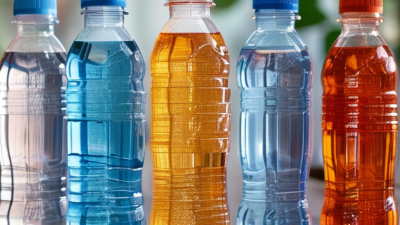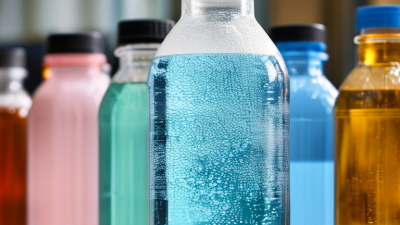
Container packaging does more than hold a product. It protects goods from pressure, moisture, impact, and contamination during storage and transport. The right choice can also make filling, stacking, opening, and disposal easier. Small details matter: a reinforced corner, a tight-fitting lid, or a liner that prevents leaks.
Packaging educator Walter Soroka describes packaging as “the science, art, and technology of enclosing or protecting products for distribution, storage, sale, and use.” That definition helps explain why one container rarely suits every product. Corrugated boxes, folding cartons, drums, pails, crates, sacks, bottles, jars, cans, and intermediate bulk containers each serve different needs. Their performance depends on the product, handling conditions, and supply chain—not just appearance.
There is no perfect choice. A sturdy container may take up valuable space, while a lighter option may need added protection. The trade-off deserves attention. This guide compares ten common container packaging types, including where each works well and what to check before selecting one. We’ll consider durability, convenience, storage, and material use without assuming that one format fits every business. Real-world conditions can be messy, too; labels get scuffed, stacks shift, and closures sometimes disappoint. Those details are worth thinking about before a packaging decision becomes routine.
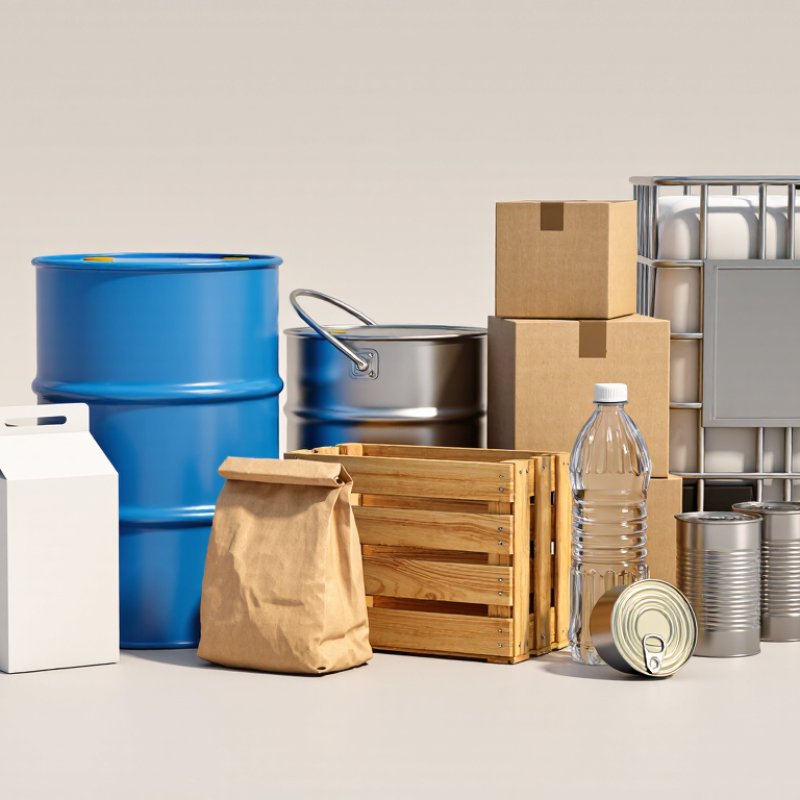
Container packaging is the container that holds a product and helps protect it during storage, handling, and delivery. It includes rigid formats such as bottles, cans, jars, and drums, as well as cartons and flexible pouches. Depending on the product, packaging may also help control moisture, prevent leaks, or provide space for instructions and product details. Definitions vary.
Its scope extends beyond the container itself. A bottle, its cap, and its label may work as one packaging system, while outer cartons and shipping cases protect goods in transit. The purpose is practical: keep contents contained, reduce damage, and make products easier to store and move. In the United States, containers and packaging made up 82.2 million tons, or 28.1% of municipal solid waste in 2018, according to the U.S. Environmental Protection Agency’s Advancing Sustainable Materials Management report. That scale matters.
Material choices shape both performance and environmental impact. The OECD’s Global Plastics Outlook reports that packaging accounted for 40% of plastic waste in 2019. A container can protect its contents well yet still use more material than necessary; that trade-off deserves scrutiny. Recyclability also depends on local collection systems, material combinations, and sorting practices, so a design that works on paper may not work everywhere. These limits should be assessed alongside protection, cost, and transport needs.

Container packaging can be classified by material, physical form, and role in the supply chain. Material groups include paperboard, glass, metal, rigid plastic, and flexible plastic. Physical form separates bottles, jars, cans, cartons, pouches, trays, and drums. A bottle and pouch may hold the same product, yet differ in barrier performance, stackability, and shipping needs. That matters.
The OECD’s Global Plastics Outlook reports that packaging generated about 40% of global plastic waste in 2019. This figure describes plastic waste, not all packaging, so it should not be treated as a market-share ranking. Classification also depends on packaging level: primary packaging touches the product; secondary packaging groups units; tertiary packaging supports transport, such as a pallet load wrapped for shipment. The U.S. Environmental Protection Agency reported 82.2 million tons of containers and packaging in the 2018 municipal solid waste stream, or 28.1% of total generation. Its broad category combines many materials and formats. Useful, but not precise enough to rank individual container types. A “top ten” list therefore changes with the chosen criteria: material, shape, use, or end-of-life route. The labels can blur. A carton may contain several materials, making simple classification less reliable.
Container packaging can be classified by form, material, and use. This chart compares one representative capacity for each of 10 common types.
Capacities are illustrative examples, not universal limits or market-share figures. Actual sizes vary by product and application. The logarithmic scale makes small and large formats easier to compare.
Container packaging protects products, supports storage, and helps control portion sizes. The U.S. EPA’s 2018 materials report counted 82.2 million tons of containers and packaging in municipal solid waste. That was 28.1% of all U.S. municipal solid waste generated that year. The scale makes package choice more than a shelf decision.
Bottles carry drinks and personal-care liquids. Jars hold sauces, spreads, and powders. Metal cans protect foods and beverages. Cartons package milk, juice, and dry goods. Drums move large volumes of ingredients. Pails suit pastes and bulk materials. Intermediate bulk containers store and transport industrial liquids. Tubs hold dairy foods and snacks. Trays support fresh produce and prepared meals. Flexible pouches pack snacks, sauces, and refill products. Each shape solves a different handling problem.
Material matters, too. Glass resists many product interactions, while lightweight plastic can reduce shipping weight. Paper-based cartons use less space when flattened, but layered materials can complicate recovery. That detail is easy to overlook. A technically recyclable pack may still miss local sorting systems. The EPA figures describe U.S. waste generation, not the performance of every package or recycling program. So compare protection, transport, shelf life, and local collection before choosing a format.
| Packaging Type | Common Materials and Formats | Typical Uses | Key Advantages | Important Considerations |
|---|---|---|---|---|
| Corrugated Boxes | Fluted paperboard between flat linerboards; single-, double-, or triple-wall constructions | Shipping, e-commerce orders, appliances, produce, and other goods needing outer transit protection | Lightweight, stackable, printable, and available in many sizes; paper fibers can be recycled where accepted | Can lose strength when wet; cushioning or inserts may be needed for fragile products |
| Folding Cartons | Printed paperboard cut and creased to fold into a box | Cereal, cosmetics, medicines, small household goods, and retail multipacks | Easy to print, store flat before assembly, and customize with inserts or closures | Usually provides limited protection from moisture and crushing unless paired with a liner or outer package |
| Rigid Plastic Bottles and Jugs | Commonly PET, HDPE, or polypropylene; available with screw caps, dispensing closures, or handles | Beverages, personal-care products, cleaning liquids, and some food products | Lightweight, shatter-resistant, and suitable for a range of shapes and dispensing needs | Material choice must match product compatibility and barrier requirements; recycling depends on local collection and sorting systems |
| Plastic Tubs and Pails | Rigid plastic containers, often made from HDPE or polypropylene, with fitted lids | Dairy foods, spreads, powders, paints, and construction or industrial materials | Wide openings allow easy filling and access; many designs can be stacked and resealed | Not all designs provide a strong oxygen or light barrier; lid fit and tamper evidence may be important |
| Flexible Pouches and Bags | Single-layer or laminated plastic films, sometimes combined with foil or paper; flat, stand-up, or spouted formats | Snacks, frozen foods, sauces, pet food, powders, and refill products | Low packaging weight, efficient storage, and flexible options for resealable or portioned products | Barrier performance depends on the film structure; multilayer laminates can be difficult to recycle in many local systems |
| Glass Bottles and Jars | Rigid glass containers with caps, lids, or other closures | Beverages, sauces, preserves, cosmetics, and pharmaceutical products | Nonporous and compatible with many products; offers a strong barrier and can be reused or recycled where systems support it | Heavier and more breakable than many alternatives; transport protection can add weight and material |
| Metal Cans | Steel or aluminum bodies with sealed ends; food cans may have an internal coating suited to the contents | Canned foods, beverages, aerosols, and selected chemical or industrial products | Strong protection from light and gases when properly sealed; metal is recyclable where collected and processed | Requires suitable filling and sealing equipment; coatings and construction must be compatible with the product |
| Aseptic Cartons | Layered paperboard with polymer layers and, in many formats, a thin aluminum barrier layer | Long-life milk, plant-based drinks, juices, soups, and other shelf-stable liquids | Can protect contents from light, oxygen, and contamination when correctly filled and sealed; efficient for shipping liquids | Requires aseptic processing and specialized filling; recycling availability varies because the material layers must be separated |
| Drums | Steel, fiberboard, or plastic cylindrical containers, commonly with removable or fixed heads | Bulk liquids, powders, food ingredients, chemicals, and industrial materials | Designed for larger quantities and handling; some designs can be closed securely and reused | Capacity, closure type, material compatibility, and applicable transport regulations must be checked for the contents |
| Intermediate Bulk Containers (IBCs) | Typically a rigid plastic inner vessel within a protective metal cage, mounted on a pallet-style base | Bulk liquids and certain flowable materials in manufacturing, agriculture, and food-processing supply chains | Holds substantially more product than many small containers and is designed for forklift handling and stacking | Must be selected and handled according to product compatibility and transport requirements; cleaning and reuse depend on the contents and container condition |
What Are the Top 10 Container Packaging Types?
Materials and Features That Distinguish Container Types
Corrugated boxes use fluted layers to cushion goods during shipping. Folding cartons are lighter and print well, while paper tubes protect long or rolled items. Glass bottles and jars offer a rigid, clear barrier, but they are heavy and can break. Aluminum cans are light and resist light and oxygen. Steel cans are sturdier and often magnetic. Different jobs, different materials.
PET bottles are clear and lightweight; HDPE containers are usually opaque and resist many household chemicals. Flexible pouches use less material and fit tight spaces, but layered films can complicate recycling. Molded-fiber trays cushion delicate items with shaped pulp. The US Environmental Protection Agency reported that containers and packaging made up 28.1% of US municipal solid waste in 2018. OECD’s 2022 Global Plastics Outlook estimated packaging produced 40% of global plastic waste in 2019.
Those figures make material choice more than a shelf-design decision. For example, a glass jar may preserve visibility, yet its weight adds transport burden. A pouch saves space, but collection systems may not accept its mixed layers. Trade-offs remain. A tidy “top ten” list can mislead: the best fit depends on product protection, filling equipment, shipping conditions, and local recovery options.
Choosing a container starts with the product, not the shelf. A glass jar suits goods that need visibility and a firm barrier, while a pouch saves space for lightweight items. Bottles, cans, cartons, tubs, trays, drums, and tubes each serve different handling needs. Match the shape to how people pour, open, store, and use the product. A container that looks neat but feels awkward to grip may disappoint customers.
Check material compatibility before comparing appearance. Test for odor transfer, staining, moisture exposure, and temperature changes. Then consider filling speed, shipping weight, breakage risk, closure strength, and storage conditions. A wide-mouth jar may fill easily but use more shelf space. A flexible pouch may ship efficiently, yet some products need stronger protection. There is no perfect choice. Small trials can reveal problems that drawings miss.
Tips: Write down three priorities, such as freshness, ease of use, and cost. Test a sample through filling and shipping. Check for leaks. Ask someone to open it with wet hands, too. One awkward cap can matter more than a polished label.