Why Are Glass Bottles Better for Packaging?
Glass bottles do more than hold a product. Their clear, cool walls let customers see the color and texture inside, while a secure cap helps protect freshness. For brands, that familiar weight can signal quality. For buyers, it can make a package feel worth keeping. Yet appearance is only part of the case.
Glass packaging has a practical advantage: it can be remelted into new containers without losing its material quality. FEVE, the European Container Glass Federation, reported an 80.1% glass packaging recycling rate across the EU in 2022. That figure reflects regional collection and recycling systems, not a guarantee that every bottle gets recycled. Still, it shows the scale of an established circular process. Michel Giannuzzi, former FEVE president, has described glass as “100% and endlessly recyclable.” The claim refers to the material’s recyclability, not to perfect collection everywhere.
There are trade-offs. Glass is heavy, so shipping can require more fuel than lighter packaging, depending on distance, vehicle, and reuse. Manufacturing also needs high temperatures. A bottle’s impact therefore depends on how it is made, transported, collected, and recycled. No package is automatically the best choice. A returnable bottle used many times may tell a different story from a single-use bottle traveling far. That detail matters. This introduction examines why glass bottles remain a strong packaging option—and where their advantages need careful, evidence-based comparison.
Materials and Properties of Glass Packaging
Why Are Glass Bottles Better for Packaging?
Materials and Properties of Glass Packaging
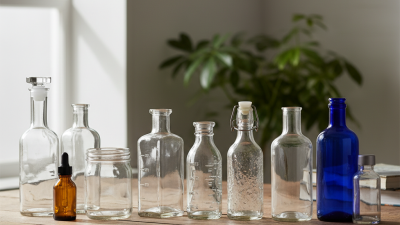
Most glass packaging is made from silica sand, soda ash, and limestone. These ingredients are melted together to form a rigid, nonporous material. Glass creates a strong barrier against moisture and oxygen, helping preserve a product’s taste and aroma. It also resists many food acids and does not readily absorb colors or smells. That matters. A jar of tomato sauce, for example, is less likely to leave a lingering scent in the container. Glass is transparent, too, so people can inspect the contents before opening. However, it can break on a hard kitchen floor, and its weight may increase transport demands. “Better” depends on the product and how the package is handled.
Tips: Check the bottle for chips before filling or reuse. Choose a shape that is easy to grip, clean, and store. Leave room for contents to expand if they may be chilled or heated; ordinary packaging glass is not automatically suitable for sudden temperature changes.
Glass’s material properties make it useful, but they are not a perfect solution. Thick walls can feel sturdy, yet add weight. Clear glass displays a product well, though light-sensitive contents may need tinted or opaque packaging. Reuse can extend a bottle’s practical life, but only when it remains intact and can be cleaned thoroughly. Small details matter. A narrow neck may pour neatly, but it can also make washing difficult.
How Glass Preserves Product Quality
Why Are Glass Bottles Better for Packaging?
How Glass Preserves Product Quality
Glass forms a dense, nonporous barrier against oxygen, moisture, and outside odors. That matters for products such as juice, sauces, and oils, whose flavor can change after exposure to air. A tightly sealed glass bottle also helps keep aromas inside, so opening it does not reveal a faint smell from nearby products. The Glass Packaging Institute’s technical guidance describes glass as impermeable to gases and vapors. Still, glass is not magic: the closure matters, and a poor cap can let air in. Dark or tinted glass can also reduce light exposure for light-sensitive contents.
Glass can be cleaned and reused, but its weight and breakability are real trade-offs. FEVE’s 2022 industry report recorded an 80.1% collection rate for glass packaging in the EU in 2021. That figure concerns recycling, not product freshness, yet it shows how widely glass containers enter established recovery systems. For quality, the practical point is simpler: use a sound seal, store the bottle away from heat, and avoid leaving it open on the counter.
Tips: Check that the cap closes firmly. Store light-sensitive products in a cool, dark place. If the seal is damaged, do not rely on the bottle alone to protect freshness.
Why Are Glass Bottles Better for Packaging? - How Glass Preserves Product Quality
| Packaging Dimension |
How Glass Performs |
Benefit for Product Quality |
Important Consideration |
| Gas and moisture barrier |
Glass is nonporous and provides a very high barrier to gases and water vapor. |
Helps limit oxygen entry, carbonation loss, and moisture exchange when the bottle is properly sealed. |
The closure and seal also affect barrier performance; the bottle alone cannot prevent leakage through a poor closure. |
| Flavor and odor neutrality |
Food-grade glass is generally non-reactive and does not readily absorb or release flavors and odors. |
Helps preserve a product’s intended taste and aroma during storage. |
Product quality still depends on the contents, storage conditions, and the suitability of the cap or liner. |
| Light exposure |
Clear glass allows light through. Amber and other colored glass can reduce transmission of some wavelengths; the level of protection varies by color and glass composition. |
Colored glass can help protect light-sensitive products from some light-related changes. |
Glass color does not guarantee complete UV or visible-light protection. Keep light-sensitive products away from strong light unless the package has been tested for its intended use. |
| Material interaction |
Glass does not typically corrode or migrate substances into food and beverages under normal, intended conditions. |
Supports product purity and is suitable for many acidic foods and drinks. |
Use packaging that meets applicable food-contact requirements and is compatible with the product and processing conditions. |
| Sealing and freshness |
A well-designed bottle-and-closure system can create a secure seal. |
Helps protect contents from air, moisture, and external contamination before opening. |
After opening, resealing quality and storage instructions influence how quickly freshness changes. |
| Temperature and handling |
Glass can tolerate many filling and storage conditions, but sudden temperature changes may cause thermal stress. |
Can be used for products that require suitable heat-processing or hot-filling systems when the bottle is designed for that use. |
Glass is breakable and heavier than many alternatives. Confirm the bottle’s specifications and avoid abrupt temperature changes. |
Health and Safety Advantages of Glass Containers
Glass offers a useful health-safety advantage: its bottle wall is chemically stable and does not require plasticizers. It also forms a strong barrier against oxygen and moisture, helping protect taste and product quality. For foods and drinks that need heat treatment, glass can tolerate many processing conditions, though sudden temperature changes may cause breakage. Handle with care.
A 2024 study in Proceedings of the National Academy of Sciences estimated about 240,000 plastic particles per liter in bottled-water samples from three brands. The study did not compare glass and plastic bottles, so it cannot prove that glass packaging reduces exposure by a specific amount. It does, however, make packaging and closure materials worth examining.
With glass, the cap, seal, washing process, and handling still matter; contamination is not ruled out just because the container is glass. One caveat: glass is not magic. It can chip or shatter, and a damaged rim should not be used. For practical safety, inspect containers before filling, keep them clean, and avoid abrupt temperature changes.
Reuse and Recycling in the Glass Packaging Lifecycle
Glass packaging has a lifecycle that can extend beyond a single drink or meal. A sturdy bottle may be washed, inspected, and refilled several times when local collection and return systems support reuse. Small details matter: a chipped rim or a poorly cleaned bottle may prevent another trip. That matters.
Reuse can reduce the need to make new containers, but distance and washing also affect its environmental value. A return route with nearby shops may work better than transporting heavy, empty bottles over long distances. Hot water and detergents require resources, too. It is easy to praise reuse and overlook these practical costs.
When a bottle cannot be reused, recycling offers another path. Glass is crushed into cullet, which can be melted with fresh raw materials to form new containers. Clean, well-sorted glass helps this process; ceramic pieces, caps, or mixed waste can complicate sorting. Recycling is not impact-free, since collection and melting use energy. Still, keeping bottles in a suitable recovery stream can preserve material value instead of sending usable glass to disposal. The system matters as much as the container.
Limitations and Trade-Offs of Glass Packaging
Why Are Glass Bottles Better for Packaging?
Limitations and Trade-Offs of Glass Packaging
Glass can protect product quality and be reused, but those benefits do not erase practical costs. A 500-milliliter bottle feels reassuring in the hand; it also adds weight to every pallet. More mass can mean more fuel per shipment, especially when bottles travel long distances or return empty for reuse. Glass can chip or shatter during filling, handling, and delivery. Not ideal for every route.
Recovery depends on local systems. The U.S. EPA’s 2018 Facts and Figures report estimated that 25% of glass containers and packaging were recycled. That national figure hides differences among communities. Recycled glass also needs sorting and clean cullet to become useful feedstock. Refillable bottles may reduce demand for new containers, but only when return trips are short, breakage is controlled, and washing is efficient. A poorly planned return loop can undercut its promised gains.
Tips: Check bottle weight, shipping distance, local collection access, and refill logistics before choosing glass. Test closures and protective cartons on a real delivery route, not just on a warehouse shelf. One caveat: the lightest package is not automatically the best; product spoilage and reuse rates matter too.