1941 West Fort St
Detroit, MI 48216
313-496-0550
Mon - Fri 8:45 a - 4 p ET
Choosing the right glass bottles can influence product safety, customer trust, shipping costs, and shelf appeal. A bottle is not merely a container. Its shape, closure, weight, and clarity affect how customers experience your brand. A thick, clear bottle may suggest quality, while a lighter design can reduce transport expenses. Looks can mislead. Fit matters.
The best choice begins with your product’s practical needs. Liquids with strong aromas may require dependable seals and compatible closures. Sensitive products may need tinted glass to limit light exposure. You should also consider filling equipment, label space, storage temperature, and expected handling. In real purchasing decisions, small details often create expensive problems. A narrow neck can slow filling. An attractive shape may waste cartons. A heavy base can increase breakage risks during delivery.
Reliable selection requires more than comparing photographs or unit prices. Request samples, test the closure, inspect the glass finish, and simulate stacking before placing a large order. Discuss specifications with experienced suppliers, including capacity tolerance, material quality, packaging methods, and production consistency. Confirm that the bottles suit applicable food, beverage, cosmetic, or general product requirements in your target markets. Standards vary, so professional verification remains important.
There is no perfect bottle for every business. A premium design may not suit a high-volume operation. A low-cost option may weaken your brand presentation. That tension deserves honest review. By balancing function, appearance, durability, and total cost, you can choose glass bottles that support dependable operations and a stronger customer experience. Details decide.
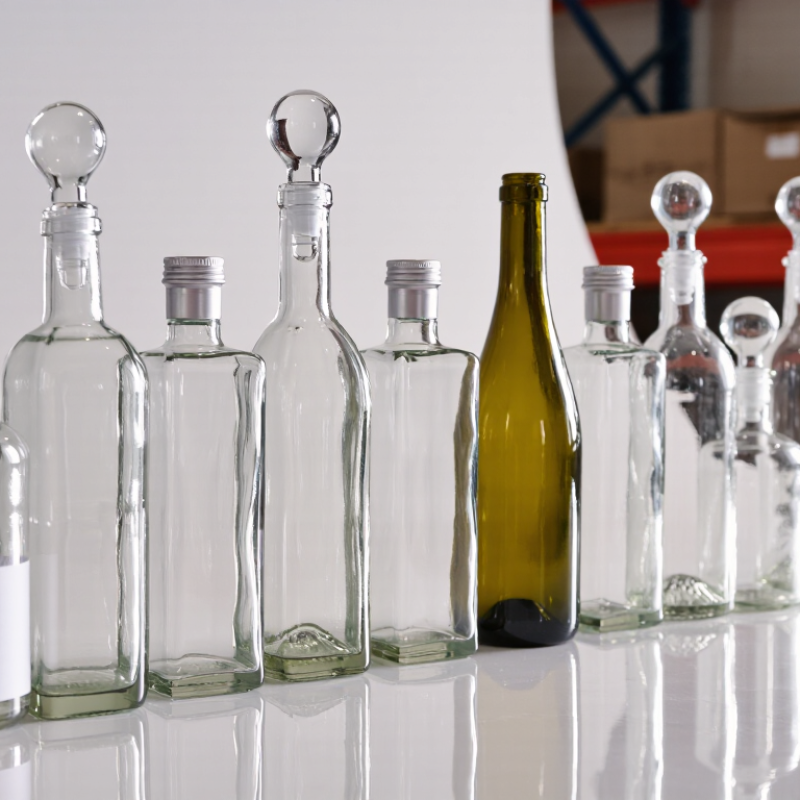
Define the requirement before comparing bottle shapes. Start with the product, not the catalogue photograph. Record fill volume, density, viscosity, acidity, temperature, and expected shelf life. Thick liquids may need wider necks and stronger closures. Hot filling requires resistance to thermal shock. Carbonated products demand pressure-rated glass and compatible caps.
Closure fit deserves careful attention. Confirm the neck finish, liner material, torque range, and tamper-evident feature. Ask the supplier for dimensional drawings and tolerance data. Small details matter. A beautiful bottle can still leak during transport. Trial the filled bottle on your real filling line, then test it after vibration, stacking, and temperature changes. ASTM C149 provides a recognized method for evaluating thermal shock resistance in glass containers.
Sustainability should also become a measurable requirement. The U.S. Environmental Protection Agency’s Facts and Figures report recorded a 25.0% recycling rate for glass containers in 2018. The figure is dated, but it exposes a practical concern: recyclability does not guarantee recovery. Specify recycled-content targets, local collection conditions, and realistic return logistics. Smithers’ glass packaging outlook also identifies lightweighting as a continuing industry direction. However, lighter is not automatically better. Excessive weight reduction may increase breakage, waste, and customer complaints. This is where specifications can remain imperfect. Leave a safety margin, document the compromise, and review the bottle after launch.
| Business Requirement | Recommended Bottle Specification | Typical Dimensions or Capacity | Suitable Product Categories | Important Selection Factors | Practical Guidance |
|---|---|---|---|---|---|
| Single-serve beverages | Lightweight clear or amber glass bottle with a narrow neck | 250–500 mL capacity; approximately 50–70 mm diameter; 180–270 mm height | Juice Water Soft drinks Cold brew | Grip, portability, carbonation pressure, closure compatibility, and resistance to thermal shock | Choose a stable base and a neck finish compatible with the intended cap. A protective secondary pack can reduce breakage during delivery. |
| Premium beverages | Thicker-walled flint glass with a distinctive silhouette | 500–750 mL capacity; commonly 70–90 mm diameter; 220–330 mm height | Premium spirits Specialty mixers Gift beverages | Perceived weight, clarity, decoration area, center of gravity, and shelf impact | A heavier bottle can support premium positioning but may increase freight cost and handling requirements. |
| Light-sensitive products | Amber, green, or opaque glass with a compatible light-protective closure | 100–1,000 mL capacity; bottle dimensions vary by product viscosity and filling method | Essential oils Pharmaceutical liquids Botanical extracts Certain oils | UV and visible-light protection, chemical compatibility, label coverage, and storage conditions | Select the glass color based on the product’s light sensitivity and verify protection with the product formulator or laboratory. |
| Viscous or particulate products | Wide-mouth glass jar or bottle with a broad opening | 120–1,000 mL capacity; opening commonly 38–89 mm depending on filling and dispensing needs | Sauces Spreads Honey Pickled foods | Filling speed, product evacuation, spoon or utensil access, gasket material, and cleanability | A wider opening improves filling and consumer access, but it may require a larger closure and more headspace control. |
| Shelf-stable food products | Food-grade soda-lime glass jar with a hermetic or screw closure | 100–1,500 mL capacity; straight-sided profiles simplify filling, labeling, and cleaning | Jams Pickles Preserves Ready-to-eat foods | Thermal-process suitability, vacuum performance, seal integrity, headspace, and closure torque | Confirm that the glass and closure system are suitable for hot-fill, pasteurization, or retort processing before production. |
| Carbonated products | Pressure-rated glass bottle with a secure crown, screw, or swing-top closure | 200–750 mL capacity; heavier base and wall design may be required | Sparkling water Beer Cider Carbonated mixers | Internal pressure, temperature variation, impact resistance, closure retention, and inspection standards | Use only containers specified for the product’s pressure and processing conditions. Pressure testing and visual inspection are essential. |
| Cosmetic and personal-care packaging | Clear, frosted, or colored glass with a compatible pump, dropper, or treatment closure | 15–250 mL capacity; compact formats commonly range from 25–60 mm in diameter | Serums Lotions Fragrances Facial oils | Dispensing accuracy, formula compatibility, decoration, closure fit, and consumer handling | Test the complete package because pumps, droppers, liners, and coatings can affect product stability and user experience. |
| Small-batch or handmade production | Standardized stock bottle with an easily sourced closure | 30–500 mL capacity; common neck finishes reduce tooling and purchasing complexity | Craft sauces Candles Infusions Gift sets | Minimum order quantity, availability, manual filling speed, label dimensions, and replacement supply | Select a readily available format before commissioning custom tooling. Standard components can shorten lead times and reduce inventory risk. |
| High-volume automated filling | Uniform machine-compatible bottle with consistent neck finish and base geometry | 250–1,000 mL capacity; dimensional tolerances must match the filling and capping equipment | Beverages Food products Household liquids | Line speed, bottle spacing, conveyor stability, capper compatibility, dimensional tolerances, and reject rates | Provide production-line drawings and equipment requirements during selection. Run a pilot test with filled and closed bottles. |
| Low transport cost | Lightweight, space-efficient bottle with a stable pallet pattern | Capacity should match demand; compact rectangular or straight-sided formats may improve case utilization | Direct-to-consumer goods Subscription products Retail multipacks | Bottle weight, case count, void space, pallet height, protective packaging, and breakage history | Compare total delivered cost rather than bottle price alone, including packaging materials, freight, storage, and damaged-product replacement. |
| Reusable or refillable packaging | Durable glass bottle with a washable finish and replaceable closure where practical | 250–1,000 mL capacity; wall thickness and design should withstand the intended handling cycle | Refill systems Hospitality service Bulk dispensing | Number of reuse cycles, cleaning temperature, abrasion, inspection process, and reverse logistics | Define cleaning, inspection, collection, and replacement procedures. Reuse benefits depend on the complete return system, not the bottle alone. |
| Brand customization without custom tooling | Standard bottle with screen printing, pressure-sensitive labels, sleeves, or applied ceramic decoration | Choose a flat or gently curved label panel; label area commonly depends on bottle circumference and height | Retail products Seasonal launches Limited editions | Decoration durability, condensation, oil exposure, label adhesion, minimum order quantity, and recyclability | Request decoration samples on the selected glass color and test them under expected storage, transport, and use conditions. |