1941 West Fort St

Detroit, MI 48216

313-496-0550

Mon - Fri 8:45 a - 4 p ET

Porter Bottle Company

Top Glass Bottles Manufacturer in China for Global Buyers

Choosing the right glass bottles manufacturer in China requires more than comparing prices. Global buyers need evidence, consistency, and practical communication. A dependable supplier should explain its production capacity, bottle molds, material standards, inspection process, and export experience clearly.

Adeline Farrelly, Secretary General of the European Container Glass Federation, states, “Glass is a permanent material: it can be recycled endlessly without loss in quality or purity.” This principle matters when selecting glass bottles for food, beverages, cosmetics, or pharmaceutical packaging. A responsible manufacturer should support product safety, efficient recycling, and stable quality from batch to batch.

Details reveal capability. Ask for sample bottles before placing a large order. Check the neck finish with your actual cap. Examine the base, seams, wall thickness, and surface clarity under strong light. A bottle that looks perfect online may show small marks after production. That happens.

Good suppliers document their raw materials, furnace operations, annealing controls, and inspection standards. They should also provide realistic lead times, protective packaging, and transparent responses when defects occur. Certifications can strengthen trust, but certificates alone do not replace factory experience or independent checks.

No supplier is perfect.

Even experienced manufacturers may face mold wear, shipment delays, or color variation. The important question is how openly they identify risks and correct them. This guide examines what global buyers should evaluate when selecting a top glass bottles manufacturer in China, helping them balance design, durability, compliance, cost, and long-term supply reliability.
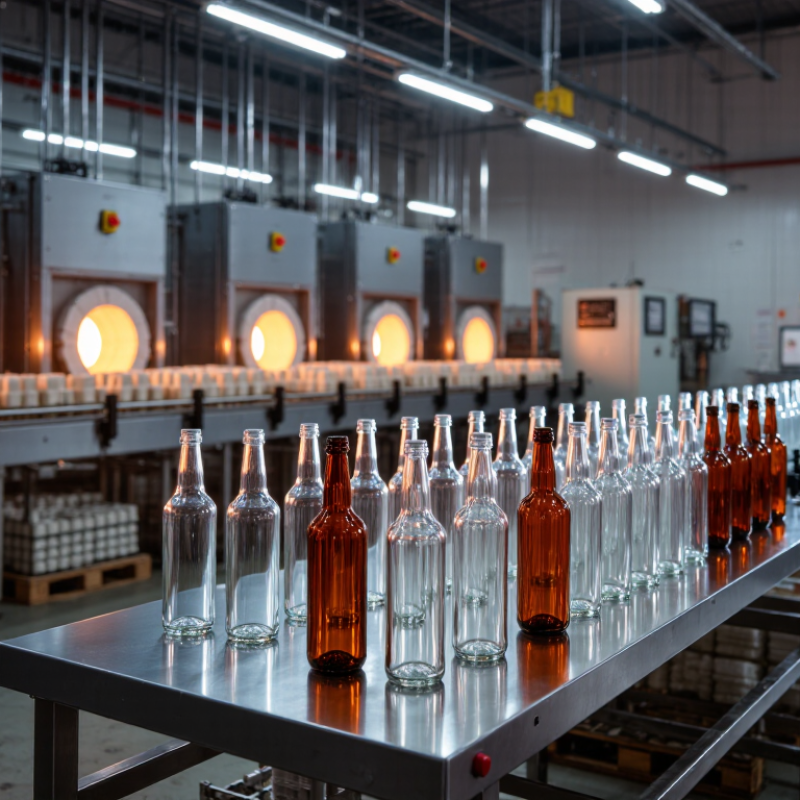
Top Glass Bottles Manufacturer in China for Global Buyers

China’s Glass Bottle Industry: Production Scale, Exports, and Market Data

China’s Glass Bottle Industry: Production Scale, Exports, and Market Data

China remains a major source of glass bottles for international buyers. China’s National Bureau of Statistics reported more than 25 million tonnes of flat and container glass output in recent years, although reporting categories differ. Container glass alone is not always separated clearly. That limitation matters. Production clusters in coastal and central provinces support large furnaces, mold workshops, and automated inspection lines. Buyers can usually request amber, clear, or green bottles with matching closures and cartons.

Export data shows strong international reach. According to UN Comtrade records for HS 7010, China exported roughly US$2.5 billion in glass containers in 2023. The category includes bottles, jars, and other containers, so it does not measure bottles alone. Major trade routes serve beverage, food, cosmetic, and pharmaceutical packaging markets. Customs data also indicates that export performance depends on destination, bottle weight, and transport distance. Heavy glass is expensive to move.

Factory visits reveal practical details that spreadsheets miss. A modern line may inspect scratches, bubbles, neck dimensions, and wall thickness before palletizing. Energy use remains a serious cost because furnaces operate continuously. Recycled cullet can reduce melting demand, but supply quality varies between regions. Buyers should verify test reports, sample consistency, food-contact documentation, and container loading plans. The market looks highly efficient, yet occasional shade variation or late mold adjustments still occur. That imperfection deserves honest discussion during sourcing.
Glass Packaging Sustainability: 100% Recyclable and Infinitely Reusable

Top Glass Bottles Manufacturer in China for Global Buyers

Glass packaging offers a clear sustainability advantage: it is made from natural minerals and is 100% recyclable. Recycled glass, called cullet, can return to the furnace repeatedly without losing its basic quality. This supports lower raw material demand and can reduce melting energy when collection systems work effectively. In our manufacturing experience, buyers often evaluate bottles by weight, wall thickness, color, and transport distance. Each detail affects the environmental footprint.

Glass can also be reused many times. A refillable bottle may serve households, restaurants, or local distribution networks before recycling becomes necessary. It needs proper washing, inspection, and handling. Otherwise, reuse becomes a slogan rather than a reliable practice. Not every bottle suits repeated filling. Shape, closure design, surface strength, and cleaning conditions matter. That point deserves more attention.

Quality control begins with raw material testing and continues through forming, annealing, dimensional checks, and visual inspection. Production teams examine cracks, bubbles, sharp edges, and inconsistent finishes. For global buyers, export packaging is equally important. Dividers, protective cartons, and pallet stability help prevent breakage during long-distance shipping. A durable bottle reduces waste, but heavier glass can increase freight emissions. The better choice depends on product use, shipping routes, refill systems, and local recycling access. Reliable sustainability claims should include these practical limitations.

Bottle Specifications: 10–750 mL Capacity, Flint, Amber, and Green Glass

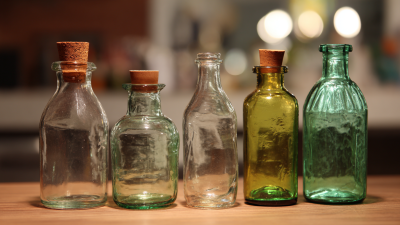
For global buyers, a capable glass bottle manufacturer in China should offer practical specification control, not only attractive catalogs. Common capacities range from 10 mL sample bottles to 750 mL retail formats. Flint glass gives a clean, bright appearance and supports accurate product-color inspection. Amber glass improves light protection for sensitive formulas. Green glass provides a distinctive appearance and moderate light filtering.

Grand View Research valued the global glass packaging market at approximately USD 62.3 billion in 2023. Its report also forecasts continued growth through 2030, driven by beverage, food, and pharmaceutical packaging demand. These figures support the need for flexible production across small and large bottle sizes. In factory audits, buyers should inspect wall-thickness consistency, neck finish accuracy, annealing quality, and drop-test records. A 10 mL bottle may need precision at the neck, while a 750 mL bottle requires stable weight distribution. Small details matter.

Tips: Request samples in flint, amber, and green glass before approving mass production. Confirm capacity by overflow volume, not appearance alone. Ask for food-contact or applicable safety documentation. Also check pallet strength and carton dividers; breakage often begins during transport. A perfect specification sheet can still fail in real shipping conditions. That is worth remembering. Some factories may provide excellent samples but uneven follow-up, so regular inspections remain necessary.

Quality Control: ISO 9001, Food-Contact Safety, and Defect-Rate Targets

For global buyers, a top glass bottle manufacturer must prove quality beyond polished samples. ISO 9001 provides a disciplined framework for documented processes, corrective actions, and traceable records. In practice, inspectors review batch numbers, furnace conditions, forming settings, and packing checks. This evidence helps purchasing teams compare suppliers fairly. It also reveals weak links. A certificate alone cannot guarantee every bottle performs perfectly.

Food-contact safety begins with controlled raw materials and suitable coatings or decorations. Testing should address migration, heavy metals where relevant, odor, and material composition for the intended use. Reliable factories retain test reports and define acceptance criteria before production. Defect-rate targets should cover bubbles, stones, cracks, chips, and dimensional variation. Targets need sampling plans, not hopeful promises. Some defects still escape detection. That deserves honest review.

Tips: Ask for a recent inspection report, approved specifications, and a sample defect board. Confirm who manages independent testing. Request corrective-action records, not only pass certificates. Check neck-finish dimensions with actual gauges. Keep a sealed reference sample. It prevents arguments later. During trial orders, track breakage and closure fit separately. Review results with the factory, then revise targets when evidence supports change.

Global Sourcing: HS Code 7010, MOQ, Lead Times, and Incoterms

For global buyers, HS Code 7010 usually covers glass bottles, jars, ampoules, and similar containers for packing. Classification still depends on the product’s construction and use. Confirm the final code with a customs broker. UN Comtrade trade data for 2023 shows worldwide HS 7010 exports exceeding US$10 billion. This confirms a mature, highly competitive supply market.

MOQ varies with bottle weight, mold design, and decoration. Standard stock bottles may start near 5,000 pieces. Custom molds often require 20,000 to 50,000 pieces per order. A factory quotation should separate mold charges, sampling fees, packaging, and testing costs. Buyers should request dimensional drawings and food-contact documentation before approving production. Small details matter.

Typical production lead times range from 25 to 45 days after artwork and specifications are approved. Custom molds can add 20 to 35 days. Sea freight planning should include port congestion and inspection delays. Under Incoterms 2020, FOB gives buyers more control over ocean freight, while CIF can simplify initial procurement. DAP may reduce coordination, but import taxes and local clearance responsibilities need careful review. ICC’s Incoterms 2020 rules clarify these obligations, not the product’s compliance requirements. A practical error remains common: treating a promised lead time as a shipping date. It is not. UNCTAD shipping data also shows that freight conditions can change quickly, so a fixed landed-cost estimate may become unreliable.

Top Glass Bottles Manufacturer in China for Global Buyers - Global Sourcing: HS Code 7010, MOQ, Lead Times, and Incoterms
Product Category Typical Capacity Common Glass Type Typical HS Code Indicative MOQ Typical Production Lead Time Common Closure Options Packaging and Export Requirements Common Incoterms Key Buyer Checkpoints
Food and Beverage Bottles 250 ml–1,500 ml Soda-lime glass; clear, amber, or green 7010 5,000–20,000 pieces for stock shapes; 30,000–100,000 pieces for new molds 25–45 days for stock items; 45–75 days for custom molds and decoration ROPP aluminum cap, crown cap, screw cap, cork, or swing-top closure Food-contact compliance documentation, carton dividers, palletization, moisture protection, and drop-test verification EXW, FOB, CIF, and DAP Neck finish, fill volume, overflow capacity, pressure resistance, dimensional tolerance, and closure compatibility
Spirits and Liquor Bottles 200 ml–1,000 ml Flint or extra-flint soda-lime glass 7010 3,000–10,000 pieces for standard designs; 20,000–50,000 pieces for custom designs 30–50 days for standard bottles; 60–90 days for custom tooling and surface treatment T-bar, bar-top, cork, screw cap, or synthetic cork Individual separators or molded pulp protection; artwork approval required for screen printing, frosting, or coating FOB, CIF, CFR, and DAP Glass clarity, base stability, stopper fit, label panel dimensions, decoration durability, and alcohol-contact suitability
Cosmetic and Fragrance Bottles 10 ml–250 ml Clear, frosted, coated, or colored soda-lime glass 7010 5,000–20,000 pieces for stock items; 30,000–100,000 pieces for custom molds 30–60 days for stock shapes; 60–100 days with mold development and decoration Crimp neck, screw neck, pump, spray, dropper, or lotion dispenser Inner trays, protective sleeves, cosmetic-grade surface finishing, and compatibility testing for pumps and formulas EXW, FOB, CIF, and DDP where legally and commercially suitable Neck specification, actuator fit, spray output, leakage resistance, coating adhesion, and color consistency
Essential Oil and Dropper Bottles 5 ml–100 ml Amber, cobalt, green, or clear soda-lime glass 7010 5,000–20,000 pieces 25–45 days for stock bottles; 45–75 days for customized components Euro dropper, glass pipette, or screw cap with orifice reducer Leak-resistant inner packaging, compatibility checks for essential oils, and protection from light where amber glass is specified EXW, FOB, CIF, and DAP Dropper accuracy, neck finish, rubber bulb compatibility, light-transmission requirements, and oil-resistance testing
Pharmaceutical and Healthcare Bottles 15 ml–500 ml Type III soda-lime glass; Type I borosilicate glass for demanding applications 7010 10,000–50,000 pieces for standard formats; higher quantities may apply to validated custom packaging 35–60 days for standard items; 60–120 days when qualification or custom tooling is required Child-resistant closure, screw cap, snap cap, dropper, or crimp seal Pharmaceutical packaging records, cleanliness controls, traceability, controlled packing, and buyer-specific validation documents FOB, CIF, and DAP Glass type, hydrolytic resistance, dimensional inspection, extractables requirements, closure integrity, and regulatory documentation
Sample and Travel Bottles 5 ml–100 ml Clear or amber soda-lime glass 7010 3,000–10,000 pieces for stock items 20–40 days for stock items; 40–70 days with printing or coating Screw cap, snap cap, dropper, spray pump, or roll-on fitment Small-format dividers, leak testing, carton labeling, and protection against neck and shoulder damage EXW, FOB, CIF, and DAP Actual fill volume, closure torque, leak performance, portability, print registration, and carton count
Custom Molded Glass Bottles 50 ml–2,000 ml Specified by design; usually soda-lime glass 7010 30,000–100,000 pieces depending on mold investment and production line 60–120 days, including design approval, mold fabrication, sampling, and mass production Selected according to the approved neck finish and filling line Engineering drawings, approved golden sample, mold ownership terms, pallet specification, and export carton validation FOB, CIF, CFR, and DAP Mold cost, cavity count, wall-thickness distribution, dimensional tolerances, annealing quality, and ownership of tooling
Recycled-Content Glass Bottles 250 ml–1,500 ml Post-consumer recycled-content soda-lime glass, usually tinted 7010 10,000–50,000 pieces depending on color and recycled-content target 30–60 days for standard formats; longer when a specific recycled-content percentage is required Screw cap, crown cap, cork, or ROPP closure Recycled-content declaration, color tolerance control, pallet protection, and documentation for sustainability claims FOB, CIF, and DAP Recycled-content percentage, color variation, strength performance, surface defects, and claim-substantiation documents
International Shipping and Trade Terms Containerized shipments Not applicable 7010 Usually based on one production run or a commercially efficient pallet quantity Transit time is additional to production lead time and varies by destination, routing, and season Not applicable Use export-grade pallets, corner protection, separators, verified gross mass, commercial invoice, packing list, and applicable origin documents EXW: buyer arranges most transport; FOB: seller delivers on board at the named port; CIF: seller pays cost, insurance, and freight to the named port; DAP: seller delivers to the named place, while import clearance and duties are generally for the buyer State the named place or port, responsibility for insurance, import clearance, duties, unloading, claims, and transfer of risk in the purchase contract
Scroll to Top