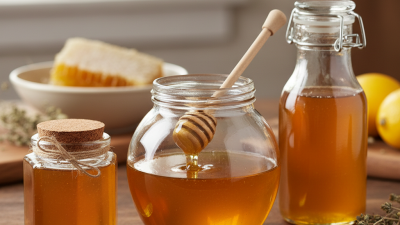
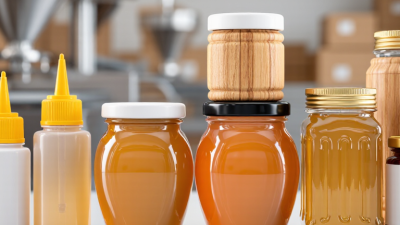
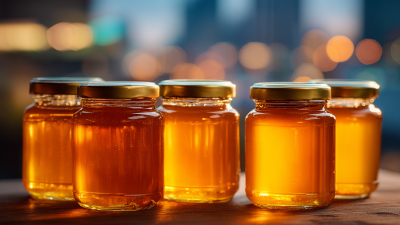
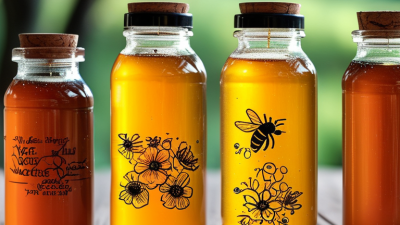
Top 10 Honey Jars for Wholesale Buyers
Choosing the right honey jars is a practical decision for wholesale buyers. It affects filling speed, transport safety, shelf appeal, and customer trust. A jar may look attractive online but perform poorly on an automated filling line. Small details matter.
Packaging specialist David Luttenberger puts it plainly: “Good packaging protects the product, supports the brand, and earns trust.” That principle guides this list of the Top 10 Honey Jars for Wholesale Buyers. Each option is considered through a buyer’s lens, including glass strength, food-contact suitability, lid compatibility, available capacities, labeling space, and shipping efficiency.
Some jars suit raw honey producers. Others work better for retail gift sets, refill stores, or large supermarket programs. Clear glass can highlight amber color and natural crystallization. However, it may increase breakage risk and freight costs. Lightweight designs can reduce shipping weight, yet they sometimes feel less premium. There is no perfect jar.
Not every supplier provides the same specifications. Buyers should request samples, confirm closure dimensions, and test seals before placing large orders. Check pallet packaging, production lead times, and minimum order quantities too. These details can change the real cost.
This guide is useful, but not flawless. Market prices, glass availability, and sustainability claims can change quickly. Use the ranking as a starting point, not a final purchase decision. The strongest wholesale choice balances protection, presentation, dependable supply, and realistic margins. Sometimes, the plainest jar wins.
Wholesale Selection Framework: Capacity, Closure, MOQ, and Pallet Efficiency
Top 10 Honey Jars for Wholesale Buyers
Wholesale Selection Framework: Capacity, Closure, MOQ, and Pallet Efficiency
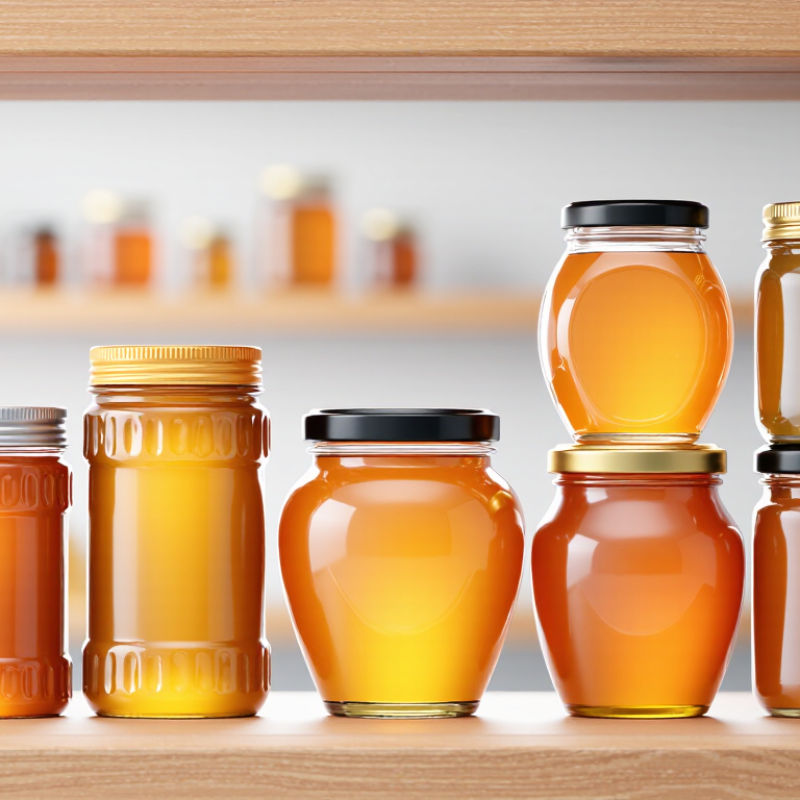
Choosing among the top ten honey jars requires more than comparing unit prices. Capacity should match the buyer’s channel, serving size, and expected turnover. Small jars suit gift counters and trial packs, while larger formats reduce packaging costs for household use. Closure quality matters just as much. A secure twist lid, consistent liner, and clean thread help prevent leakage during storage and transport. Test filled samples before placing a large order. Empty jars can hide practical problems.
Tips: Ask for the jar’s exact external dimensions, filled weight, carton count, and pallet pattern. Compare usable pallet volume, not only carton quantity. A slightly taller jar may create wasted space between pallet layers. Confirm the minimum order quantity for each capacity and closure combination. Some suppliers apply separate MOQs to colors, lids, or custom packaging.
Pallet efficiency affects the real wholesale cost. Review carton strength, stacking limits, and corner protection before approval. Request a packing diagram and calculate freight using the complete pallet footprint. A lower-priced jar may become expensive if it needs extra pallets. I have seen buyers focus too heavily on the glass price and overlook damaged cartons or inefficient loading. That judgment is understandable, but incomplete. A practical comparison sheet should record capacity, closure type, MOQ, cartons per pallet, estimated breakage risk, and lead time. Recheck the figures after a pilot shipment. Supplier data can be accurate, yet still fail under actual warehouse conditions.
Honey Quality Benchmarks: Codex Moisture ≤20% and HMF ≤40 mg/kg
Top 10 Honey Jars for Wholesale Buyers
Honey Quality Benchmarks:
Codex Moisture ≤20%
HMF ≤40 mg/kg
Wholesale buyers should evaluate each jar beyond its label and appearance. Codex benchmarks provide a practical quality reference: moisture should remain at or below 20%, while HMF should not exceed 40 mg/kg. Excess moisture can encourage fermentation. Elevated HMF may indicate overheating or prolonged storage.
Numbers matter. Request batch-specific laboratory reports before approving a shipment. Check the test date, sample identification, testing method, and laboratory credentials. The jar on your desk should match the tested batch. A polished report means little if the production lot changed.
I inspect ten candidate jars for seal integrity, fill level, clarity, and sediment. I also compare aroma and texture across samples. Sensory checks help, but they cannot replace laboratory testing. A firm lid and clean label are useful signs, not proof. I have seen attractive packaging hide inconsistent moisture results. That experience changed my purchasing routine.
Record storage temperature and transport conditions. Heat during a warehouse delay can affect HMF values. Keep reserve samples from every lot. Recheck questionable batches instead of relying on one result. Quality work is rarely perfect; sampling can miss variation between jars. For that reason, buyers should combine Codex benchmarks, traceable records, and repeated verification.
Jar Materials Compared: Glass, PET, and Food-Contact Compliance
For wholesale honey buyers, jar material affects flavor protection, freight cost, and inspection risk. Glass offers strong oxygen and moisture resistance. It also gives honey a clean, premium appearance. However, a pallet of glass jars is heavy and breakable. One careless forklift turn can create expensive losses.
PET jars are much lighter and resist impact during transport. Their transparency also helps buyers inspect color, crystals, and fill levels. Yet PET needs careful food-contact verification, especially with warm filling or long storage. PlasticsEurope reported that packaging represented 39.3% of European plastics demand in 2022. That figure makes material efficiency important, but it does not replace migration testing. Check declarations against applicable requirements, including FDA 21 CFR provisions or EU Regulation 1935/2004.
For a top-ten wholesale shortlist, ask for test records, closure compatibility, and batch traceability. A food-contact declaration should identify the resin, intended temperature, and contact conditions. Glass can still fail operationally if its neck finish does not match the lid. PET can also show scuffing after rough pallet handling. The trade-off is real. Smithers’ The Future of PET Packaging to 2029 highlights lightweighting and recyclability as major market priorities. I would not select the cheapest jar automatically. A slightly heavier PET wall may reduce dents, while a lighter glass design may increase breakage. Run a small transport trial with filled jars, stacked cartons, and actual warehouse handling before committing to volume.
Top 10 Jar Profiles: 250 g, 340 g, 500 g, and 1 kg Formats
Wholesale honey buyers often compare jar profiles before decoration or price. Four sizes cover many retail and foodservice needs: 250 g, 340 g, 500 g, and 1 kg. The 250 g jar suits trial purchases, gift shelves, and lighter honey varieties. Its smaller footprint reduces shelf commitment. However, a narrow opening can slow filling and complicate removal after crystallization. That detail is easy to miss.
The 340 g format offers a practical middle option for everyday households. It balances hand comfort, shelf presence, and shipping weight. Choose a stable base and a closure with a dependable seal. Small leaks can damage cartons and customer trust. A 500 g jar works well for regular honey users and independent retailers. It provides stronger value perception without becoming difficult to lift. Check the shoulder shape, label area, and cap torque during sample testing. Photos cannot reveal every handling problem.
The 1 kg jar targets families, catering kitchens, and high-volume users. Use a wide mouth when thicker honey or crystallization is common. Confirm pallet patterns before approving the final profile. Tall jars may waste carton space, while broad jars can improve stability. Wholesale decisions should include food-safe material thickness, tamper evidence, and batch traceability. Attractive jars can still fail when lid threads are inconsistent. A second test is worthwhile. Leave room for honest revision.