What Are the Top Cosmetic Containers for Global Buyers?
Global buyers need cosmetic containers that protect formulas, support efficient filling, and communicate quality at first glance. The right choice depends on product texture, closure performance, shipping conditions, and local customer expectations. Airless pumps suit sensitive creams because they reduce repeated exposure to air and fingers. Glass jars offer a premium appearance, while lightweight plastic can reduce transport weight and breakage risks. Refillable designs may also support sustainability goals, but only when cleaning, sealing, and refill instructions remain practical.
Material compatibility requires real testing. Oils, alcohol-based formulas, acids, and essential oils can react differently with plastics, coatings, pumps, and liners. A package may look excellent during sampling yet fail after weeks of contact. That is why experienced procurement teams request stability tests, leakage checks, drop testing, and accurate decoration samples. Supplier documentation matters too. Buyers should review material specifications, production tolerances, batch controls, and relevant quality certifications before approving large orders. Details such as a 24/410 neck finish, a smooth pump stroke, or a tight inner seal can affect the entire user experience.
There is no universal winner.
This guide examines the top cosmetic containers for global buyers through a practical lens. It compares usability, protection, appearance, customization, cost, and supply reliability. Some recommendations may change by market or formula. That limitation deserves attention. A beautiful container is not automatically a dependable one. Careful testing, clear supplier communication, and honest evaluation help buyers select packaging that performs beyond the product photos.
Cosmetic Container Types and Their Main Applications
What Are the Top Cosmetic Containers for Global Buyers?
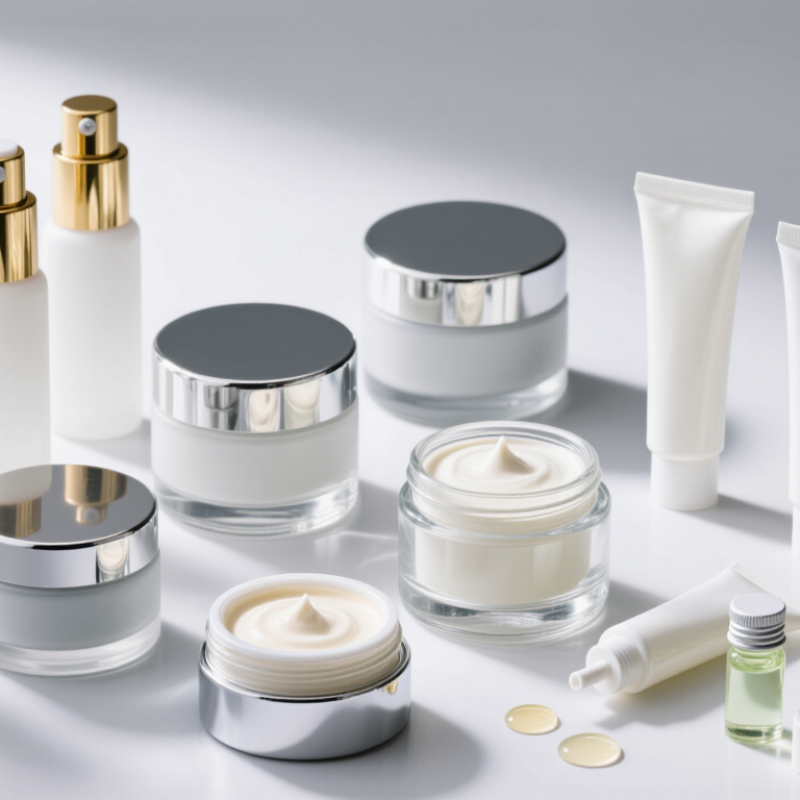
Cosmetic container selection starts with product texture, dosage, and daily handling. Bottles suit cleansers, toners, and lightweight lotions. Pumps reduce hand contact and help deliver measured doses. Jars work well for thick creams, masks, and balms, especially when consumers prefer a wide opening. Tubes remain practical for toothpaste-like creams, travel products, and precise dispensing.
Airless containers support serums and sensitive formulas by limiting repeated air exposure. Droppers offer controlled application for facial oils and concentrated treatments. Compacts fit pressed powders, blushes, and foundation products, while small glass bottles often serve premium oils.
Grand View Research estimated the global cosmetic packaging market at more than USD 30 billion in 2023, showing strong demand across these formats.
Material choice changes the application. Plastic is lightweight and resists breakage during international shipping. Glass feels substantial, but it adds freight weight and breakage risk. Aluminum can protect selected formulas and supports a distinct tactile experience.
McKinsey’s 2023 sustainability in packaging research identified recyclability as a major consumer concern. Yet recyclable does not always mean widely recycled. That distinction matters.
Buyers should test pumps, caps, seals, and labels under heat, cold, vibration, and humidity. A beautiful container can fail at the closure.
Small details matter.
The best option is not always the most expensive one. Product compatibility, filling efficiency, transport conditions, and local recycling systems require equal attention.
Material Choices for Cosmetic Packaging
Global cosmetic buyers increasingly judge containers by material performance, not appearance alone. Grand View Research estimated the cosmetic packaging market at about USD 32.7 billion in 2023, with steady growth expected through 2030. That expansion increases pressure on suppliers to balance protection, cost, and environmental impact.
Glass remains valuable for serums, fragrances, and premium creams. It offers strong chemical stability and a heavy, reassuring feel. However, transport weight and breakage can raise emissions and distribution costs. Aluminum is lighter and provides strong protection against light and oxygen. Its forming process can also support refillable designs. Still, coatings must be tested carefully, especially with acidic or oil-rich formulas.
Plastic offers the widest design flexibility. PET and PP support lightweight bottles, pumps, and jars, while post-consumer recycled content can reduce dependence on virgin resin. The Ellen MacArthur Foundation has reported that recycled plastic supply remains far below global demand. Availability is uneven.
Paper-based containers attract attention, but moisture resistance remains a practical weakness. A recent McKinsey packaging study found that recyclability is among consumers’ leading sustainability concerns across major markets. Yet consumers may not understand complex material combinations. That matters. A recyclable-looking container may fail local sorting systems if its pump, liner, or coating cannot be separated.
Material decisions should include drop tests, compatibility testing, closure performance, and regional recycling guidance. A beautiful container that leaks during shipping is not sustainable. I have seen material claims become too optimistic when real supply conditions are ignored. For global buyers, the better choice may be less dramatic, but more consistently recyclable and usable.
Key Design Features for Global Buyers
What Are the Top Cosmetic Containers for Global Buyers?
Key Design Features for Global Buyers
Global cosmetic buyers now assess containers beyond appearance. They examine material recovery, shipping efficiency, user safety, and regional compatibility. The OECD’s Global Plastics Outlook reports that only 9% of plastic waste was recycled between 2019 and 2020. This makes simple material choices commercially important. Mono-material jars, clear recycling instructions, and removable labels can improve sorting. However, “recyclable” claims require local verification. Collection systems differ widely between markets.
Design must also survive real handling. A pump should deliver consistent doses after air transport, temperature changes, and repeated bathroom use. Airless containers can reduce product exposure, but their internal components may complicate recycling. Lightweight bottles lower freight weight, yet thin walls can crease or leak. The right balance is not always obvious. Global buyers should request compatibility testing with the formula, closure, decoration, and filling line. The Sustainable Packaging Coalition also emphasizes practical recovery pathways, not attractive claims alone.
Tips:
Ask for migration, leakage, drop, and pressure-test records. Check whether local recyclers accept every component. Use tactile openings and readable contrast for broader accessibility. Provide labels in required languages, with batch details and safe-use information. Refill systems deserve testing too; consumers may not return containers consistently. That uncomfortable gap needs honest planning. Packaging decisions should be measured in the market, not only approved in a design meeting.
Sustainability and Regulatory Considerations
Global cosmetic buyers are rethinking containers through sustainability and compliance. Material choice now affects transport, recycling, product safety, and market access.
OECD’s Global Plastics Outlook reports that only 9% of plastic waste was recycled globally in 2019. This makes lightweight, recyclable packaging attractive, but not automatically responsible. Mono-material polypropylene jars and pumps can simplify sorting. Recycled plastic can reduce virgin material demand. However, PCR quality varies, and impurities may affect color, odor, or formula stability. Glass offers strong chemical resistance and a premium feel. It also increases shipping weight and breakage risk. Aluminum provides durability, but coatings and mixed components can complicate recovery.
Regulatory checks must begin before purchasing. Cosmetic containers should support safety assessments, compatibility testing, and accurate material claims. In the European Union, buyers must consider Cosmetics Regulation 1223/2009, REACH requirements, and evolving packaging rules. The United States also requires stronger facility and product oversight under MoCRA. UNEP’s Turning off the Tap report suggests plastic pollution could fall by 80% by 2040 through reuse, recycling, and reduced consumption. That target is ambitious. Refill systems may reduce packaging, yet they need controlled hygiene, clear instructions, and reliable collection networks. A reusable container can fail environmentally when customers rarely reuse it.
Ask for recycled-content evidence, migration test results, and recycling guidance for each market. Avoid vague claims such as “eco-friendly.” Details matter. A smaller pump, thinner wall, or removable label may deliver measurable progress, though every design still deserves scrutiny.
How to Select the Right Cosmetic Container Supplier
Selecting the right cosmetic container supplier requires more than comparing unit prices. Grand View Research estimated the global cosmetic packaging market at over USD 30 billion in 2023, with continued growth expected through 2030. That expansion increases supplier choices, but not necessarily supplier quality. Airless pumps suit oxidation-sensitive creams, while tubes reduce product exposure during daily use. Glass bottles offer a premium feel, yet they add weight and breakage risk. Fit matters.
Ask for material specifications, compatibility tests, migration documentation, and sample approvals before discussing large orders. A reliable supplier should explain resin grades, closure tolerances, filling temperatures, and leak-test methods. Packaging machinery also matters. A container that looks perfect may fail on a high-speed filling line. Request pilot-run evidence, not only photographs. The Smithers sustainable packaging market analysis highlights rising demand for recycled and recyclable formats, but sustainability claims need measurable evidence. Ask for recycled-content percentages, certification details, and supply-chain traceability.
Lead time, minimum order quantity, and mold ownership deserve equal attention. A cheaper jar can become costly when its mold requires repeated corrections. Build a supplier scorecard covering quality history, testing capacity, communication speed, and contingency planning. A corrective-action process is essential. Mistakes happen. Silence is worse. Buyers should also inspect pre-shipment samples and retain approved reference pieces. Some evaluations remain imperfect because real product stability can differ from laboratory assumptions. Recheck the container after heat, cold, vibration, and extended storage.
What Are the Top Cosmetic Containers for Global Buyers?
Supplier selection is typically driven by product safety, packaging compatibility, reliable delivery, sustainability documentation, decoration capability, and total cost. The 100-point benchmark below provides a practical framework for comparing cosmetic container suppliers without relying on brand-specific data.
Use these weights as a starting point, then adjust them according to the formula type, target market regulations, order volume, sustainability goals, and required delivery schedule.