How to Choose the Best Liquid Bottles for Your Products?
Choosing the best liquid bottles is a practical packaging decision, not a purely visual exercise. The right bottle must protect the formula, survive transport, fit production equipment, and communicate quality within seconds. A narrow neck may reduce spills, while a wide opening can improve dispensing for thicker products. Small details matter.
Smithers’ packaging market analysis projects global packaging demand to exceed $1 trillion this decade, reflecting intense competition for materials, manufacturing capacity, and consumer attention. Its research also highlights sustainability, lightweighting, and recyclability as major development priorities. Meanwhile, the Ellen MacArthur Foundation reports that packaging represents a significant share of global plastic use. That makes material selection difficult. Recycled PET, HDPE, glass, and bio-based plastics each bring different costs, strengths, and environmental trade-offs.
Packaging sustainability specialist Robert Lilienfeld has expressed a useful principle: “The most sustainable package is the one that does its job.” The wording is simple. The decision is not. A bottle that leaks, breaks, or causes excessive product waste may perform worse overall, even when its material appears greener.
This guide examines liquid bottles through product compatibility, closure performance, barrier protection, appearance, filling speed, shipping conditions, and end-of-life recovery. Real testing remains essential. Laboratory results can miss a hot warehouse, a rough delivery route, or a customer squeezing the bottle too hard. Some recommendations may need revision after pilot production. That is normal. Good packaging selection is an evidence-based process, but it still requires judgment.
Define Product Requirements and Liquid Compatibility
How to Choose the Best Liquid Bottles for Your Products?
Define Product Requirements and Liquid Compatibility
Bottle selection begins with the liquid, not the label design. Record its pH, alcohol level, oils, surfactants, viscosity, and fragrance compounds. These details affect swelling, cracking, odor transfer, and leakage. Temperature also matters. A bottle that survives warehouse storage may deform during hot filling.
The OECD Global Plastics Outlook reports that packaging represents about 40% of global plastic use. This pressure makes material efficiency important, but compatibility must come first. Plastic type alone does not prove safety. Test the bottle, cap, liner, and dispensing system together. Check chemical migration, seal performance, drop resistance, and torque after storage. Use real product samples whenever possible. Water testing is too simple.
Tips: Create a compatibility matrix. Test at minimum and maximum temperatures. Include expected shelf life, transport vibration, and repeated opening. Record visual changes and weight loss.
Industry packaging guidance from Smithers also highlights recyclability, downgauging, and regulatory compliance as major selection factors. However, lighter packaging can lose stiffness or barrier performance. That trade-off deserves honest review. In practical trials, observe a filled bottle after several weeks, not only immediately after filling. A slightly cloudy wall, loose closure, or changed scent may signal a deeper failure. Mistakes happen. Document them before approving production.
Compare Bottle Shapes, Sizes, Closures, and Dispensing Options
How to Choose the Best Liquid Bottles for Your Products?
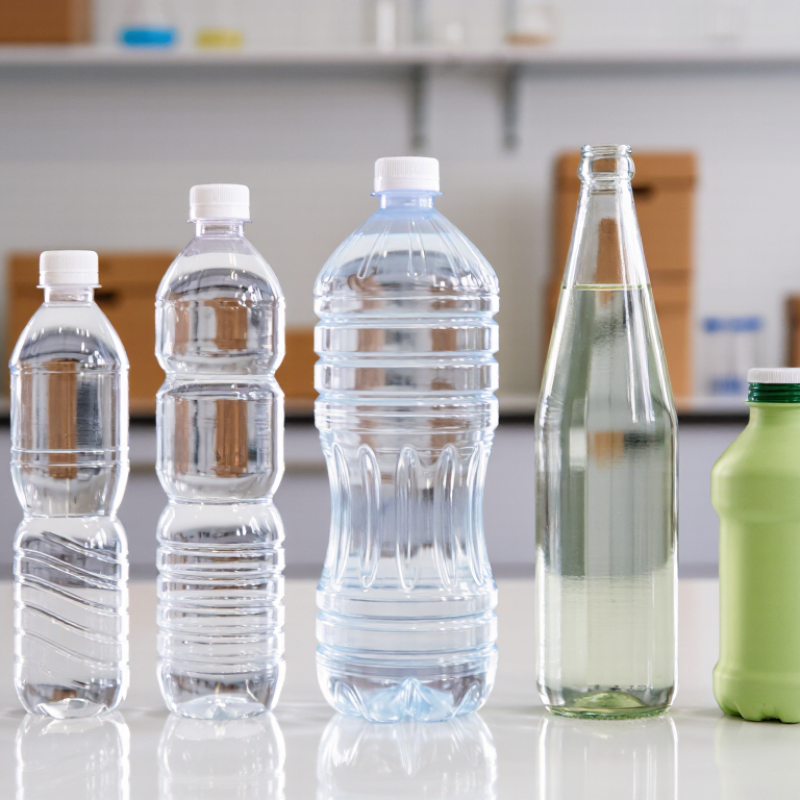
Bottle shape affects grip, shelf visibility, filling speed, and shipping stability. Round bottles roll easily, while rectangular designs use warehouse space better. Tall, narrow bottles feel elegant but may tip during transport. Shape matters. In packaging trials, I check filled-bottle stability on a vibrating surface before approving the design. The OECD Global Plastics Outlook 2022 identifies packaging as responsible for about 40% of global plastic waste. Efficient shapes can reduce empty space and material use, but lighter walls may crush more easily.
Size should match dosage, usage frequency, and expected storage conditions. A 30 ml bottle suits concentrated products, while a 500 ml format supports repeated household use. Oversized bottles can increase waste and shipping costs. Small bottles may frustrate users who need frequent refills. I still underestimate how strongly hand comfort influences repeat use. Test before scaling.
Closures and dispensing systems deserve equal attention. Screw caps protect against leakage, while flip-tops support one-handed use. Pumps control portions, but thick liquids may require wider channels and stronger springs. Droppers improve precision, although they can slow high-volume filling. According to Smithers’ packaging research, convenience and sustainability remain major forces shaping packaging development through the decade. Select the closure after testing viscosity, drop size, torque, leakage, and repeated opening. No bottle is perfect. A practical trial should include heat, cold, vibration, and at least several weeks of real handling. Consumer preference data helps, but physical evidence should make the final decision.
Evaluate Safety, Sustainability, Branding, and Regulatory Needs
Choosing a liquid bottle requires more than comparing shape and price.
In production trials, test the filled bottle, cap, label, and transport carton together. Check leakage, drop resistance, closure torque, and chemical compatibility with the formula. A bottle that survives an empty-bottle inspection may still soften, swell, or discolor after several weeks.
Safety must guide every material decision.
Request food-contact or applicable product-contact documentation, migration testing, and batch traceability from suppliers. Regulatory expectations vary by market, so confirm recycled-content claims, labeling rules, and required technical files before production. The OECD’s Global Plastics Outlook reports that global plastic waste doubled between 2000 and 2019, while only 9% was recycled. That figure makes material efficiency important, but recycled resin can show more color and performance variation. Perfect consistency is not guaranteed.
Sustainability should include the full package system.
Compare lightweighting, recycled content, refill models, and local recyclability. UNEP’s 2023 Turning off the Tap report estimates that plastic pollution could fall by 80% by 2040 through reuse, recycling, and reduced consumption. Branding still matters. A stable bottle should feel comfortable, open cleanly, and present graphics without distortion. Test labels under moisture, oil, refrigeration, and warehouse heat. Small details matter. A reliable bottle protects the product, supports credible claims, and reduces avoidable complaints.