1941 West Fort St

Detroit, MI 48216

313-496-0550

Mon - Fri 8:45 a - 4 p ET

Porter Bottle Company

How to Choose the Best Plastic Bottles for Your Business?

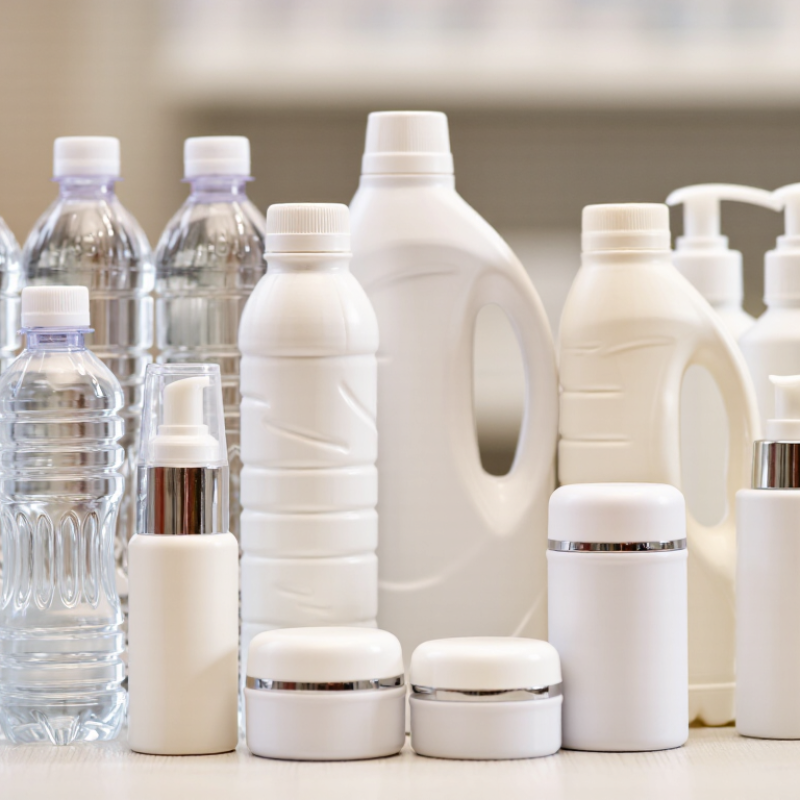
Choosing the right plastic bottles can shape your product’s safety, appearance, cost, and customer experience. A bottle may look attractive on a sample table, yet fail when exposed to heat, pressure, oil, or repeated handling. The best choice begins with the product itself. Consider its formula, filling temperature, shelf life, dispensing method, and storage conditions.

Material selection requires practical knowledge. PET often suits beverages, cosmetics, and clear packaging because it is lightweight and transparent. HDPE offers stronger chemical resistance and a more opaque finish. PP can perform well when higher heat tolerance or flexibility matters. These are useful starting points, not automatic answers. Compatibility testing remains essential.

Small details matter. Check whether the cap seals evenly, whether the bottle stands securely, and whether labels wrinkle on curved surfaces. Ask suppliers for material specifications, quality records, sample results, and documented food-contact or product-contact compliance where applicable. Reliable manufacturers should explain production tolerances, closure options, minimum order quantities, and testing procedures clearly.

Do not choose by price alone. A cheaper bottle can create leakage, damaged labels, or costly product returns. A heavier design may feel premium, but it can increase shipping expenses and material use. Recycled content may support sustainability goals, though its color, consistency, and performance need careful review. No option is perfect. A thoughtful decision balances function, safety, branding, budget, and environmental impact. Test real samples before committing to large production.
How to Choose the Best Plastic Bottles for Your Business?

Define Your Business’s Plastic Bottle Requirements

How to Choose the Best Plastic Bottles for Your Business?

Define Your Business’s Plastic Bottle Requirements

Start with the product, not the bottle’s appearance. Identify its viscosity, acidity, fragrance, temperature, and expected shelf life. A thin liquid may need a narrow opening for controlled pouring. A thick lotion may require a wider neck and stronger dispensing system.

Write down the required capacity, bottle height, diameter, weight, and closure type. Check whether the bottle fits your filling, labeling, capping, and storage equipment. A small dimensional mismatch can slow a whole production line. It can also create leaks. Ask for technical drawings and sample bottles before approving large quantities.

Material selection deserves careful testing. Common options include PET, HDPE, PP, and recycled-content plastics. Each offers different clarity, stiffness, chemical resistance, and barrier performance. Confirm compatibility with the formula through accelerated tests and real-time observation. Do not rely only on a general supplier chart. Your product may behave differently.

Consider transport, customer handling, and disposal conditions. A lightweight bottle saves material, but it may dent during delivery. That trade-off needs evidence. Test filled samples after vibration, drops, temperature changes, and stacking. Review food-contact or other applicable safety requirements for your market. Keep test records, specifications, and approval dates. Requirements change. So should your review.
Compare Plastic Bottle Materials and Their Properties

How to Choose the Best Plastic Bottles for Your Business?

Compare Plastic Bottle Materials and Their Properties

Material choice affects product safety, shelf life, appearance, and filling performance. In packaging evaluations, I compare the bottle with the product, not just the purchase price.

Polyethylene terephthalate

Polyethylene terephthalate, or PET, offers clear visibility and good stiffness. It suits beverages, personal care liquids, and products displayed on shelves. However, PET may deform under high heat unless the design supports hot filling.

High-density polyethylene

High-density polyethylene, known as HDPE, feels slightly opaque and resists impact well. It works for household liquids, shampoos, and thicker formulas. It also performs reliably in cooler storage conditions.

Polypropylene and Low-density polyethylene

Polypropylene, or PP, handles higher temperatures better than many common plastics. This makes it useful for containers exposed to warm filling or repeated handling. Low-density polyethylene, or LDPE, remains flexible. It is practical for squeeze bottles, but its softness can reduce stacking stability.

Do not ignore chemical compatibility.

Oils, solvents, fragrances, and acidic formulas can interact differently with each material. A bottle may pass a short test and still fail after weeks of storage. I have seen caps loosen, walls cloud, and labels wrinkle. That part deserves more attention.

Test filled samples under real temperatures, transport movement, and expected shelf time. Check the closure, seal, colorant, and recycled content together. A technically strong bottle can still feel wrong in the customer’s hand.

Choose the Right Bottle Design, Size, and Closure

Choosing the best plastic bottle starts with how customers will use it. In packaging trials, I study the product before judging the appearance. A thick lotion usually needs a wide neck and a pump. A thin liquid may work better with a narrow opening. Hold a filled sample in one hand. Check its balance, grip, and weight.

Size also affects shipping, storage, and customer expectations. A 100 ml bottle suits travel products, while a 500 ml bottle may fit regular household use. Measure the actual fill line, not just the bottle’s advertised capacity. Leave enough headspace for temperature changes and dispensing. A bottle that looks attractive can still waste shelf space. Small details matter.

The closure must match the formula and usage habits. Screw caps provide simple, dependable sealing. Flip-top closures offer quick access. Pumps can control dosage and reduce spills. Test the closure with repeated opening, closing, squeezing, and transport. Check leakage after the bottle lies on its side for several hours. Request technical drawings, material information, and suitable compliance documents from the supplier. I once approved a sample with a stiff cap; customers struggled to open it. That decision needed more testing. Real users often expose problems that factory samples hide.

Evaluate Safety, Sustainability, and Regulatory Compliance

Choosing plastic bottles begins with safety, not appearance. Match the material to the product, storage temperature, and filling process. Food, cosmetic, and household formulas may require different plastic grades. Ask suppliers for food-contact declarations, migration test results, and batch traceability records. A clear bottle can still create problems if light damages the contents.

Regulatory requirements vary by market. Check local rules for chemical restrictions, labeling, recycling marks, and documentation. Request a current certificate of analysis and confirm that test results cover your exact bottle, cap, and liner combination. Do not rely on a generic compliance statement. It may be incomplete. I have seen packaging decisions change after heat testing exposed leaks and deformation.

Tips: Test before scaling. Fill sample bottles with the real product. Store them under expected heat, cold, and transport conditions. Inspect odor, color, cracks, leakage, and cap performance after testing. Choose recycled content only when its quality and approved use are documented. Sustainability claims also need evidence, such as material composition and recyclability guidance. A lighter bottle may reduce plastic use, but a weak wall can increase waste through damage and returns. Keep supplier records, test reports, and approval dates together. Small gaps in documentation can become expensive later.

How to Choose the Best Plastic Bottles for Your Business? - Evaluate Safety, Sustainability, and Regulatory Compliance

Comparison of commonly used bottle materials for packaging decisions. Actual performance depends on bottle design, additives, closures, processing conditions, and the intended product.

Material Typical Applications Food-Contact Safety Considerations Temperature Guidance Chemical Resistance Barrier Performance Recycling Identification Sustainability Factors Reuse Suitability Regulatory Compliance Checks
PET
Polyethylene terephthalate
Water, soft drinks, juices, edible oils, sauces, and personal-care products Widely used for food and beverage packaging when the resin, colorants, additives, and manufacturing process are approved for the intended contact use. Generally suitable for ambient and refrigerated filling. Standard PET bottles are not normally intended for hot filling unless specifically engineered for that process. Good resistance to dilute acids, oils, and many beverages. Compatibility should be tested with strong solvents, concentrated alkalis, and aggressive formulations. Good carbon-dioxide retention; moderate oxygen and moisture barrier. Light protection may require approved colorants or an outer layer. Code 1 Lightweight and widely collected in many markets. Recycled content can reduce virgin-plastic demand, subject to local availability and food-contact requirements. Suitable for designed returnable systems only when the bottle is manufactured, cleaned, inspected, and validated for repeated use. Ordinary single-use bottles should not be treated as refillable packaging by default. Confirm applicable food-contact authorization, migration limits, recycled-content rules, colorant approval, and labeling requirements in each sales market.
HDPE
High-density polyethylene
Milk, household chemicals, shampoo, detergents, personal-care products, and some food containers Commonly used for food and cosmetic packaging because of its low moisture absorption and chemical stability. The complete formulation must be suitable for the product. Good performance across ordinary refrigerated and ambient conditions. High-heat filling and sterilization require a grade and design specifically validated for those conditions. Very good resistance to acids, bases, salts, and many detergents. Some hydrocarbons, solvents, and essential oils may cause swelling, stress cracking, or permeation. Very good moisture barrier; weaker oxygen and aroma barrier than PET or multilayer structures. Code 2 Highly established recycling stream in many regions. Lightweighting and recycled resin can reduce material use, but recycled content quality and supply vary. Can be used in validated refillable systems. Repeated use may cause scratches, odor retention, or mechanical wear, so cleaning and inspection controls are necessary. Verify food-contact status, chemical compatibility, pigment approval, recycled-resin documentation, and packaging-waste labeling for the destination market.
PP
Polypropylene
Hot-fill containers, sauces, dairy products, cosmetics, pharmaceutical packaging, and closures Often selected for food and medical-related packaging because of its relatively high heat resistance. Safety depends on the exact grade, additives, and processing controls. Typically offers better heat resistance than PET and LDPE. The actual limit depends on wall thickness, orientation, fill temperature, sterilization method, and load conditions. Good resistance to acids, bases, and many chemicals. Certain aromatic solvents, oxidizing agents, and elevated temperatures may reduce performance. Good moisture barrier; limited oxygen and aroma barrier unless combined with a barrier layer or coating. Code 5 Lightweight and suitable for durable designs. Collection and recycling infrastructure is less consistent than for some PET and HDPE packaging markets. Appropriate for selected reusable systems when the design is durable and validated. Reuse suitability is not established by the resin code alone. Check hot-fill or sterilization validation, food-contact declarations, additive and pigment compliance, migration testing, and local recycling-label rules.
LDPE
Low-density polyethylene
Flexible squeeze bottles, condiments, personal-care products, and dispensing packages Generally suitable for food and cosmetic contact when produced from an approved formulation. Its flexibility can increase the risk of deformation or closure leakage if poorly designed. Suitable for ordinary ambient use; elevated-temperature filling requires product-specific testing because the material is softer and less dimensionally stable than HDPE or PP. Good resistance to aqueous chemicals and many acids or bases. Oils, hydrocarbons, and some solvents can permeate or affect mechanical properties. Good moisture barrier; relatively weak oxygen, aroma, and solvent barrier. Code 4 Low density can reduce package weight, but flexible-film and LDPE collection systems are not equally available in all regions. Usually better suited to single-use or controlled dispensing applications than repeated consumer reuse, unless specifically designed and validated for reuse. Confirm food-contact authorization, squeeze-fatigue performance, seal integrity, chemical compatibility, and market-specific recycling instructions.
Recycled PET
Post-consumer recycled PET
Beverage and personal-care packaging where recycled content is permitted and traceability is available Food-contact use requires an approved recycling process and documented controls for contamination, input materials, decontamination, and traceability. Not all recycled PET is suitable for direct food contact. Similar thermal behavior to the underlying PET design, but processing history and recycled-content level can affect color, intrinsic viscosity, and mechanical performance. Generally comparable to PET when properly processed and formulated; compatibility testing remains necessary for the packaged product. Generally comparable to PET, although color, haze, and barrier performance may vary with feedstock and processing quality. Code 1 Supports circular-material goals and can reduce reliance on virgin resin. Benefits depend on collection rates, recycling efficiency, transport, energy use, and actual recycled content. Recycled content does not by itself make a bottle reusable. Reuse requires a durable design, cleaning process, inspection criteria, and an appropriate safety validation. Verify the percentage and source of recycled content, food-contact authorization where applicable, chain of custody, migration data, and extended-producer-responsibility obligations.
Selection checklist: Define the product chemistry, filling temperature, shelf-life target, drop and compression requirements, light sensitivity, closure system, recycled-content objective, collection conditions, and destination-market regulations before approving a bottle design.

Regulatory note: Requirements differ by jurisdiction. Common reference frameworks include applicable food-contact regulations such as United States 21 CFR provisions, European Union Regulation (EC) No. 1935/2004, Regulation (EU) No. 10/2011 for plastic materials, and Regulation (EC) No. 2023/2006 on good manufacturing practice. Always obtain current declarations of compliance and complete product-specific migration and compatibility testing.

Assess Suppliers, Costs, and Quality Before Ordering

Choosing the best plastic bottle starts with supplier evidence, not attractive samples. Request resin specifications, production capacity, inspection records, and recent batch data. The OECD Global Plastics Outlook reports that global plastic production reached 460 million tonnes in 2019, while only 9% was recycled. Material selection therefore deserves serious attention. Ask whether the bottle uses recycled content, and verify its percentage independently.

Compare total cost, not only the quoted unit price. Include tooling, freight, closures, labels, storage, testing, and expected waste. A cheaper bottle may deform during filling or leak during transport. Test samples with your actual liquid, filling temperature, cap torque, and shipping conditions. Check wall thickness at several points. One attractive sample proves very little. I would also request at least three supplier quotations, although this can slow an urgent launch.

Tips: Build a simple supplier scorecard. Give separate scores for quality, lead time, documentation, price, and communication. Use measurable limits, such as leakage below a defined rate and delivery variance within an agreed range. The ISO 9001 quality-management framework supports documented processes and corrective actions, but certification alone cannot guarantee suitable bottles. Inspect the factory or use an independent laboratory when volume is significant. Keep retention samples from every approved batch. Small oversights become expensive later, and some purchasing assumptions will need revision.

Scroll to Top