
1941 West Fort St
Detroit, MI 48216
313-496-0550
Mon - Fri 8:45 a - 4 p ET
Choosing the right cover tape can determine whether electronic components arrive clean, dry, and ready for automated placement. Heat Sealing Cover Tape uses controlled heat and pressure to bond with carrier pockets, creating a stable seal without relying on adhesive alone. In production environments, this method can provide consistent peel performance, clear visibility, and dependable component protection. Small details matter. Temperature settings, sealing pressure, carrier material, and dwell time must match the packaging system.
From practical packaging experience, operators often value the tape’s predictable release during high-speed pick-and-place processes. A clean peel helps reduce component movement, feeding errors, and unnecessary machine stops. Transparent films also allow quick inspection of parts, pockets, and possible contamination. However, no sealing method works perfectly in every application. Excessive heat may distort sensitive materials, while weak sealing can expose components to dust or moisture. That is why qualified suppliers recommend testing peel strength, seal integrity, and storage performance before full-scale use. Test it properly.
A reliable specification should include tape width, film structure, sealing temperature range, peel force, and compatibility with the carrier. Technical data sheets are useful, but real production trials remain essential. Heat Sealing Cover Tape can support efficient packaging when selected with care and applied under controlled conditions. Its value comes from consistency, not marketing claims. The best choice protects components, supports automation, and gives operators confidence throughout handling, transport, and assembly.
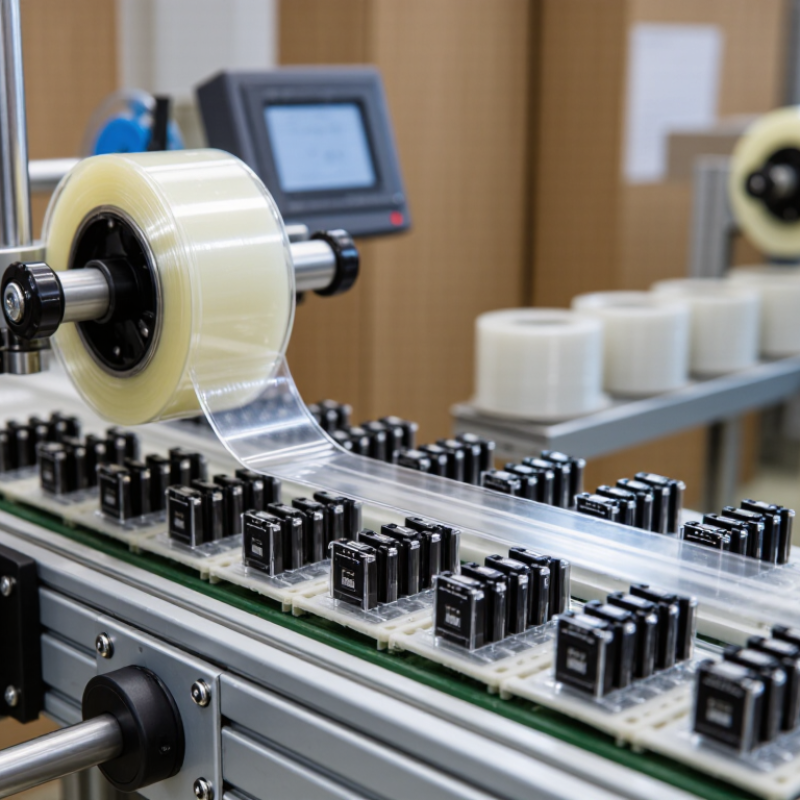
Heat sealing cover tape is a protective film used with carrier tape to secure electronic components during storage and transport. Heat activates its adhesive layer, creating a controlled seal over the pockets. The tape is later peeled away by an assembly machine. This process protects small parts from dust, vibration, and accidental loss.
According to SEMI’s 2024 World Fab Forecast, global semiconductor manufacturing capacity is expected to grow by about 6% in 2025. More components require dependable packaging. ANSI/EIA-481 specifies carrier-tape dimensions and pocket requirements, while IPC/JEDEC J-STD-033 addresses moisture-sensitive device handling. These references show why sealing performance must match the component and packaging system.
Temperature, sealing pressure, and dwell time affect peel force. Too little heat can leave gaps. Too much may damage the carrier tape or create uneven peeling. In practice, engineers often test the seal after aging, vibration, and changes in humidity. A clear film helps operators inspect the pocket before opening. It is not a perfect solution, though. Dust can still enter through poor alignment, and “easy peel” can become unreliable at low temperatures. Production teams should record actual machine settings, not rely only on supplier recommendations. Small process differences matter.
| Data Dimension | Typical Information | Practical Significance |
|---|---|---|
| Definition | A lidding film or tape with a heat-activated sealing layer used to close trays, cups, tubes, or small containers. | It forms a bond when heat and pressure activate the coating against a compatible container surface. |
| Basic Construction | Usually consists of a carrier film, a heat-seal coating, and, when required, an outer printable or protective layer. | The layered structure balances sealing performance, tear resistance, printability, and product protection. |
| Common Carrier Materials | Polyester (PET), polypropylene (PP), polyethylene (PE), paper-based laminates, and other engineered film structures. | Carrier selection affects stiffness, transparency, dimensional stability, puncture resistance, and recycling compatibility. |
| Compatible Container Materials | Common substrates include PET, PVC, PP, PS, PE, coated paperboard, and selected multilayer laminates. | The sealing layer must be chemically and thermally compatible with the rim or flange material. |
| Typical Sealing Temperature | Approximately 120–180°C for many heat-seal structures; the actual operating window depends on the coating and container material. | Lower-temperature sealing can reduce energy use and help protect heat-sensitive products. |
| Sealing Process | The tape is positioned over the container, then heat and pressure are applied for a controlled dwell time. | Consistent temperature, pressure, and dwell time are essential for uniform seals and reliable production speed. |
| Opening Method | Depending on the design, the seal may be peelable, tearable, or intended to provide a more permanent closure. | The opening profile can support consumer convenience, tamper evidence, or product security. |
| Main Advantages | Fast application, consistent sealing, clean appearance, customizable width, and suitability for automated packaging lines. | These features can improve packaging throughput and reduce the need for mechanical closures or liquid adhesives. |
| Barrier Performance | Barrier properties vary by film structure; options may provide resistance to moisture, dust, oxygen, light, or aroma transfer. | Barrier selection should match the product’s sensitivity and the required shelf-life conditions. |
| Typical Applications | Blister packs, medical and laboratory packaging, food trays, electronic components, hardware, and industrial parts. | The format is useful when products require protection from contamination, handling, or environmental exposure. |
| Printability | Many structures can be printed with product information, instructions, batch details, barcodes, or tamper-related messages. | Printing can improve identification, traceability, and communication at the point of use. |
| Quality-Control Factors | Important checks include seal appearance, seal width, peel or opening force, leakage, bond uniformity, and dimensional accuracy. | Testing helps confirm that the package remains closed during storage, transport, and normal handling. |
| Key Selection Criteria | Container substrate, required seal strength, opening behavior, operating temperature, film thickness, transparency, and barrier needs. | Correct specification improves production stability and reduces the risk of weak seals, leakage, or difficult opening. |
| Important Limitation | A heat-sealing cover tape cannot be selected by appearance alone; performance depends on the specific coating, container surface, and sealing equipment. | Trial sealing and application-specific testing are recommended before full-scale production. |