What Is Construction Adhesive Used For?
Construction Adhesive is used to bond building materials where nails or screws may be impractical, unwanted, or insufficient on their own. Depending on its formulation, it can attach wood, drywall, panels, masonry, foam board, or trim to compatible surfaces. A bead behind a wall panel, for example, can help limit movement and reduce rattling. That matters.
On renovation and construction projects, adhesive can also fill small gaps between mating surfaces and support a cleaner finish. Some products are made for indoor use, while others tolerate moisture, temperature changes, or heavier loads. The label is essential: “construction adhesive” does not mean one formula works on every material. A product suitable for subflooring may not be appropriate for foam insulation or plastic.
Good results depend on more than choosing a strong adhesive. Surfaces generally need to be clean, dry, and stable, and the bead size and curing time should match the product instructions. Dust, paint, moisture, or uneven contact can weaken the bond. Even experienced installers should check compatibility and test an inconspicuous area when materials are unfamiliar. That pause can prevent rework. This guide explains common uses, material pairings, and practical limits, so you can decide when Construction Adhesive is suitable—and when a mechanical fastener or another method may be the better choice.
What Construction Adhesive Is and How It Differs from Mechanical Fasteners
Construction adhesive is a bonding material used to join surfaces such as wood, concrete, drywall, and some metals. It differs from a nail or screw, which holds materials at specific points. Adhesive forms a bond across the contact area. A screw can provide immediate restraint; adhesive usually needs time to cure. That difference matters when a panel shifts under its own weight.
On a job, adhesive may help attach trim, subfloor panels, wall panels, or insulation, depending on the product and materials. The installer still needs clean, compatible surfaces and the specified bead size. Dust, moisture, or a poor fit can weaken the bond. Not every adhesive is structural. For load-bearing connections, follow the design and product specifications; adhesive should not casually replace engineered fasteners.
The market is substantial, but size is not proof of performance. Grand View Research estimated the global construction adhesives market at about USD 10.7 billion in 2023. That figure reflects industry demand, not a guarantee that any bond will work in a particular assembly. It is easy to overlook cure time on a busy site. I would treat adhesive as a distinct connection method, not simply “glue instead of screws.”
What Is Construction Adhesive Used For?
An illustrative comparison of bonded area and fastener contact area
Construction adhesive is used to bond materials such as trim, panels, and subflooring. Unlike mechanical fasteners, which hold materials at discrete points, adhesive can form a continuous bonded interface. The chart uses an example 100 × 100 mm bond area and ten 6 mm diameter fasteners with 40 mm embedment; fastener contact area is estimated as the cylindrical shank area (π × diameter × embedment × 10). These geometric areas do not indicate or compare joint strength—actual performance depends on the materials, product, surface preparation, and installation.
Which Materials and Surfaces Construction Adhesives Can Bond
Construction adhesive can bond many building materials, but the surface matters as much as the product. Common combinations include wood to wood, gypsum board to wood framing, and plywood to lumber. ASTM C557-03(2021) covers adhesives for gypsum board and wood framing; ASTM D3498-19 addresses field-glued plywood-to-lumber construction. These standards show that “construction adhesive” is not one universal formula. It is designed for particular materials and conditions.
Some formulations also bond concrete, masonry, metal, rigid foam, ceramic tile, and selected plastics. Check the technical data sheet for the exact substrate and whether the bond is approved for indoor, outdoor, or load-bearing use. The USDA Forest Products Laboratory’s Wood Handbook (FPL-GTR-282, 2021) describes how wood properties vary with species and moisture. In practice, a damp, dusty concrete wall or a glossy metal panel may bond poorly unless prepared as directed. Clean the surface; let it dry. Then test a small area.
Porous materials such as timber and masonry can absorb adhesive, while smooth surfaces may need different preparation. That detail is easy to miss. Adhesive can help reduce fasteners in some assemblies, but it should not replace mechanical support where the design or product instructions require it. Check compatibility with coatings, foam, and plastics before applying. A small test patch can reveal trouble.
Where Construction Adhesive Is Used in Building and Repair Work
What Is Construction Adhesive Used For?
Construction adhesive is used to bond building materials where nails or screws are awkward, visible, or insufficient on their own. In building work, it can help secure subfloor panels to joists, drywall to framing, and wood trim to walls. Some formulations also bond masonry, foam insulation, or metal, but one adhesive does not suit every surface. Check the product label for compatible materials and indoor or outdoor use.
In repairs, adhesive can hold a loose stair nosing, reattach a section of wall paneling, or reduce squeaks beneath a floor. A bead applied to the back of a trim board can limit movement and leave fewer visible fasteners. Small gaps matter. Dust, paint, moisture, and uneven surfaces can weaken the bond, so clean and prepare the area as directed. Then allow enough time for curing; a joint that feels firm may not be fully set.
Adhesive is not a shortcut for every repair. Heavy, overhead, or load-bearing parts may need mechanical fasteners or professional assessment, even when the bond seems strong. It is easy to expect one tube to fix a problem permanently. That assumption can be wrong, especially on damp or flexible surfaces. Use the amount and application method specified, and test an inconspicuous area when appearance matters.
What ASTM D3498 and ASTM C557 Specify for Adhesive Applications
Construction adhesive is defined by its job, not by a single all-purpose formula.
ASTM D3498 covers adhesives used to field-glue plywood to lumber framing in floor systems.
ASTM C557 addresses adhesives for fastening gypsum wallboard to wood framing.
These standards describe different assemblies, so passing one does not establish suitability for the other. That distinction is easy to miss.
The USDA Forest Products Laboratory’s Wood Handbook reports that green-to-oven-dry shrinkage commonly ranges from 3% to 12% tangentially and 2% to 8% radially, depending on species.
That movement helps explain why substrate condition matters: dusty framing, damp lumber, or an uneven adhesive bead can weaken contact.
For a plywood subfloor, follow the D3498-relevant product and assembly instructions, including bead placement and panel fastening.
For gypsum board, use an adhesive meeting the C557 application requirements and follow the specified fastening schedule.
Not interchangeable.
The standards set useful performance boundaries, but they do not replace checking the actual materials, site conditions, and installation instructions.
Even careful work can miss a dry spot beneath a panel. Small detail, real consequence.
How to Choose and Apply Construction Adhesive for the Job
Construction adhesive can bond materials such as wood, drywall, masonry, and some flooring. Choosing the right formula matters more than choosing the strongest one. Check that its label lists both surfaces you plan to join. A product made for indoor trim may not handle outdoor moisture or temperature changes. Small details matter.
Consider the load, surface texture, and movement in the joint. Heavy panels may need mechanical fasteners as well as adhesive. For smooth, nonporous materials, confirm that the product is suitable; some adhesives need one porous surface to cure properly. Read the package directions for working time, temperature limits, and curing time. A rushed choice can lead to a bond that looks fine today but loosens later.
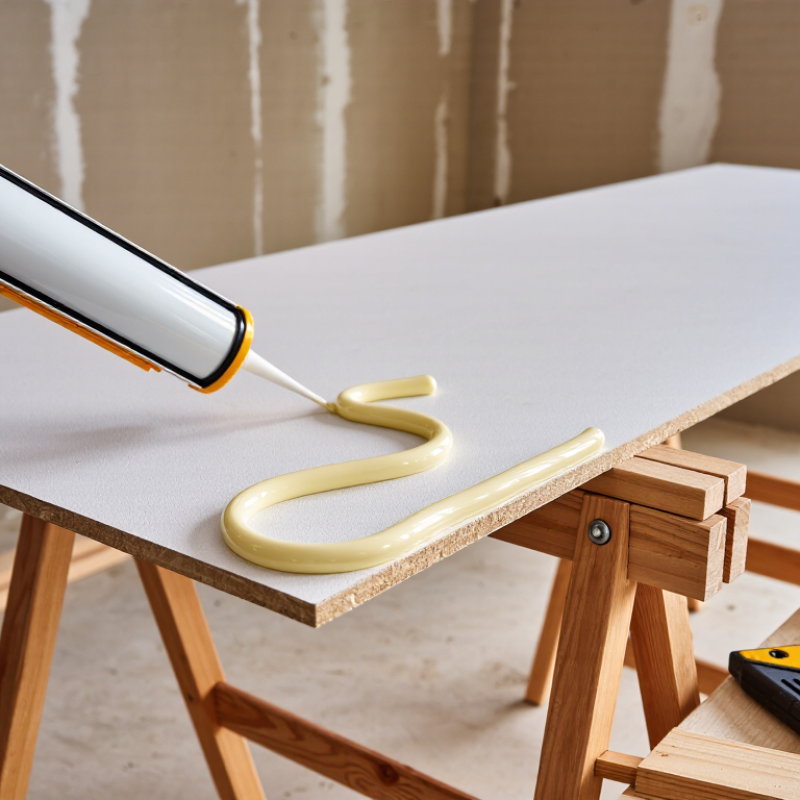
Before applying, make sure the surfaces are clean, dry, and free of dust or loose paint. Cut the nozzle to make a bead sized for the job, then apply it in lines or small serpentine patterns, following the directions. Press the pieces together and support them with clamps or temporary bracing if needed. Let it cure fully before loading the joint. Ventilate the area, and wear gloves if the label recommends them. It is tempting to use extra adhesive, but thicker beads do not always create stronger bonds.
What Is Construction Adhesive Used For? - How to Choose and Apply Construction Adhesive for the Job
Construction adhesive is used to bond building materials where a suitable product can provide a durable connection. The right choice depends on the materials, exposure, joint movement, load, and the product’s stated application limits.
| Adhesive Type | Common Uses | Important Considerations | Application Notes |
| Water-based latex | Interior trim, paneling, and other porous building materials, when approved by the product label. | Usually has lower odor than many solvent-based products. It generally relies on moisture loss to cure, so it may be unsuitable for nonporous surfaces or persistently wet conditions. | Apply to clean, dry surfaces. Some products need temporary bracing or clamping while they set; check the label for open time and cure time. |
| Solvent-based | Some flooring, paneling, trim, and general building-material bonding applications specified on the label. | May offer strong initial grab, but solvent can damage certain plastics, coatings, or foam materials. Ventilation is important, and the product may be flammable before curing. | Use only where the listed materials and conditions are suitable. Follow ventilation, fire-safety, and cleanup instructions on the product label. |
| Polyurethane | Selected indoor or outdoor bonding jobs involving materials such as wood, masonry, or metal, depending on the formulation. | Some formulations cure in the presence of moisture and may expand during curing. Expansion does not make an adhesive a substitute for a properly designed joint or mechanical fastener. | Use the specified bead size and joint arrangement. Protect the joint from movement as directed, and wear gloves because uncured material can be difficult to remove. |
| Hybrid polymer | Selected trim, panel, and general assembly applications, including some jobs exposed to weather when specifically rated for them. | Properties vary by product. Confirm that the label lists both substrates and the intended exposure; “water resistant” or “weather resistant” does not automatically mean suitable for every submerged or structural use. | Apply to surfaces prepared as directed. Observe the stated working time, support requirements, and full-cure time before loading the joint. |
| Two-part epoxy | Small, specific repairs or bonding jobs on compatible materials where a rigid, high-strength bond is required. | Requires accurate mixing and may cure relatively rigidly, making it a poor choice for joints that need substantial movement. Working time and material compatibility vary. | Measure and mix the components exactly as instructed. Use within the stated working time and keep the joint undisturbed until sufficiently cured. |
How to Choose and Apply Construction Adhesive
| Step | What to Do | Why It Matters |
| 1. Identify the materials | Check the adhesive label for both surfaces being bonded, such as wood to concrete or trim to drywall. | An adhesive suitable for one material or pairing may not bond reliably to another. |
| 2. Check the conditions | Confirm whether the job is indoors or outdoors and whether the joint may encounter moisture, temperature changes, or movement. | Exposure ratings and flexibility differ by product. Select one specifically approved for the expected conditions. |
| 3. Prepare the surfaces | Remove dust, grease, loose paint, and debris. Follow the label’s directions for surface dryness and any special preparation. | Contaminants and weak surface coatings can prevent a sound bond. |
| 4. Apply the correct amount | Cut the nozzle to the recommended opening and apply the specified bead or pattern. Avoid assuming that more adhesive will compensate for poor contact. | Bead size, coverage, and application pattern affect contact, squeeze-out, and curing. |
| 5. Position and support | Bring the surfaces together within the product’s working time. Clamp, brace, or fasten them temporarily if the instructions require it. | Movement before the adhesive sets can weaken or misalign the bond. |
| 6. Allow full cure | Wait for the stated cure time before applying load, sanding, painting, or exposing the joint to water. | Surface drying does not necessarily mean the adhesive has cured throughout the joint. |
| 7. Use safely | Follow label instructions for gloves, eye protection, ventilation, storage, and disposal. Use mechanical fasteners when required by the design or local code. | Construction adhesive is not automatically a replacement for nails, screws, anchors, or a code-approved structural connection. |