
China’s wrapping equipment sector serves food, beverage, pharmaceutical, and consumer-goods producers with very different line requirements. Buyers comparing China Top Wrapping Machine Manufacturers and Suppliers should look beyond brochure speed. Film tension, seal consistency, changeover time, and access to spare parts matter on a real production floor. A poorly adjusted jaw can leave uneven seals; a slow format change can idle an entire shift. Details count.
Grand View Research estimated the global packaging machinery market at USD 53.7 billion in 2023 and forecast a 4.7% compound annual growth rate from 2024 to 2030. This broad market figure is not specific to wrapping machines, but it signals sustained investment in packaging automation. PMMI’s State of the Industry research also tracks machinery demand and changing manufacturer priorities. As PMMI president and CEO Jim Pittas put it, “The packaging and processing industry is a resilient and dynamic sector, and the outlook for 2024 is positive.” That outlook is encouraging, though forecasts cannot guarantee a supplier’s performance. Buyers still need machine trials and clear service terms.
This guide examines Chinese suppliers of the “Wraping Machine” category, including flow wrappers, stretch wrappers, and shrink systems. It considers product range, customization, quality controls, and after-sales support. A polished factory tour helps, but it does not replace reference checks or sample runs. Some supplier claims may look impressive on paper. Verify them against your own film, product, and target speed before committing.
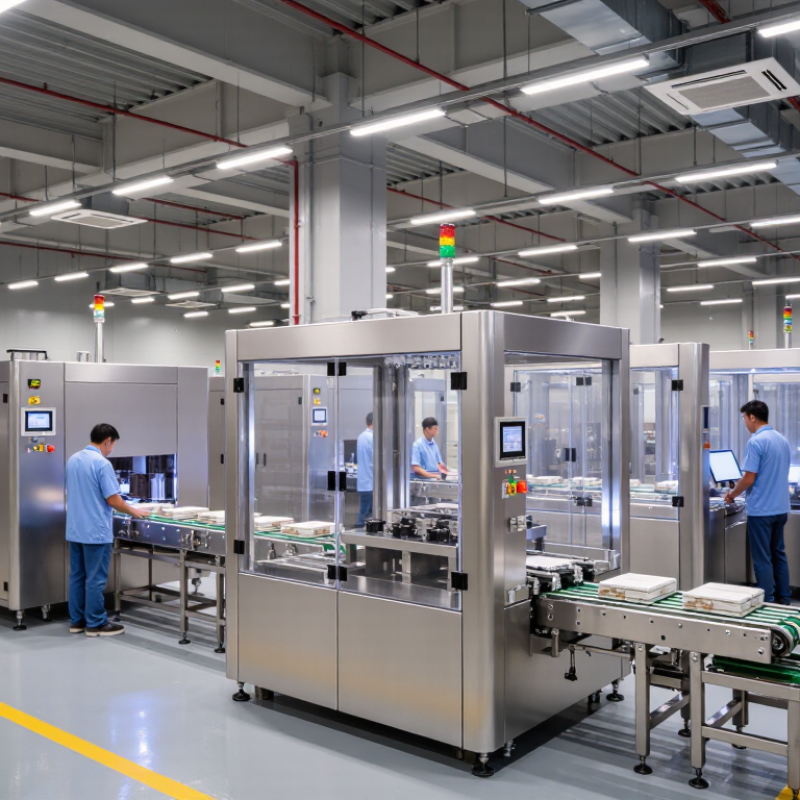
Wrapping machines apply protective or presentation materials around products, bundles, and pallet loads. Their core functions include feeding film or paper, controlling tension, positioning the product, and sealing or cutting the material. A typical line may use sensors to detect each item and adjust its timing. Seal temperature and conveyor speed matter; poor settings can leave loose edges or damage a package.
Common formats include stretch-wrapped pallets, flow-wrapped individual products, shrink-wrapped multipacks, and paper-banded bundles. Stretch wrapping helps stabilize cartons during storage and transport. Flow wrapping forms a sealed sleeve around items such as bars or small boxes. Shrink systems use heat to tighten film around grouped products. Different jobs, different setups. Operators should check package dimensions, product fragility, and required protection before choosing a machine. Film width, roll changes, and access for cleaning also affect daily performance. A line that runs well with rigid cartons may struggle with soft pouches. There is no perfect setting. Even after careful testing, small adjustments may be needed when materials or product sizes change.
Wrapping machines turn a continuous film roll into a close-fitting package through coordinated movement and control. The film unwinds over rollers, passes a forming collar, and folds around the product. A dancer arm or tension sensor helps keep the web steady as the roll diameter changes. Small changes matter. Uneven tension can cause wrinkles, shifting seals, or film breaks. Operators should check roll alignment and film tracking during setup, not only after production begins.
Sealing depends on heat, pressure, and contact time. On many machines, heated jaws close across the film while a cutter separates each package. If the jaw temperature is too low, seals may open; too much heat can distort the film. The right settings depend on film structure, thickness, and line speed. Control systems coordinate these settings with conveyors and sensors. A touchscreen may show alarms and operating values, but it cannot judge every seal defect. A practical check is to inspect sample packages after adjustments and test the seal consistently. Settings rarely work perfectly on the first attempt. That is normal, though repeated manual corrections may signal a tracking or maintenance issue rather than an operator error.
For China’s wrapping-machine suppliers, film gauge and pre-stretch are useful starting points for comparing equipment. A 15–30 μm film range covers many pallet-wrapping applications, but the right gauge depends on load shape, weight, and transport conditions. Smithers’ report, The Future of Stretch and Shrink Films to 2028, highlights material efficiency and packaging performance as important industry concerns. The figures are benchmarks, not guarantees.
A machine rated for up to 300% pre-stretch can extend film to roughly four times its relaxed length. That can reduce film use, yet poor tension control may cause breaks or unstable loads. Ask suppliers for test results using your own film and pallet profile. ASTM D5458 provides a repeatable method for measuring stretch-film cling. A clean benchmark can still mislead; corner protection and load geometry matter too.
Tips: Test a full pallet, not just a sample roll. Record film consumption, breaks, and load movement. Recheck settings after changing film thickness; small differences can matter.
Representative film gauges within the 15–30 μm benchmark range; some systems offer pre-stretch capability of up to 300%.
The bars show film thickness in micrometers. Up to 300% pre-stretch is a separate machine-capability benchmark and is not plotted on the same scale.
China’s wrapping-machine manufacturers offer equipment for products ranging from individual cartons to full pallet loads. Common types include stretch wrappers, shrink-wrapping systems, flow wrappers, and automatic case wrappers. Stretch units secure palletized goods with film; shrink systems use heat to form a close outer layer. Flow wrappers handle individual items, while case wrappers group products for transport. Different jobs.
Supplier capability goes beyond machine output. A capable supplier can discuss package dimensions, film thickness, line speed, and available floor space before recommending a model. Ask whether the machine supports recipe storage, safety guarding, adjustable conveyors, and connections to upstream or downstream equipment. A practical factory trial should use representative products and packaging materials. Watch changeover time, seal consistency, film waste, and access for cleaning. Small details matter.
After-sales support is another useful comparison point. Check what training, spare parts, remote troubleshooting, and on-site service the supplier can provide. In practice, a specification sheet rarely shows how smoothly a line handles uneven cartons or frequent size changes. That is easy to overlook. Some suppliers may quote confidently before every operating condition is clear, so request written assumptions and acceptance criteria. A careful evaluation makes supplier capabilities easier to compare, even when machines look similar.
| Machine Type | Typical Products and Applications | Wrapping Method and Materials | Common Supplier Capabilities | Key Selection Considerations |
|---|---|---|---|---|
| Pallet stretch wrapper | Palletized cartons, bags, and other unit loads for storage or transport. | Applies stretch film around a stationary or rotating load; common formats include turntable and rotary-arm systems. | Manual, semi-automatic, and automatic models; options may include powered pre-stretch, top-sheet application, and conveyor integration. | Load dimensions and weight, required containment, film use, throughput, and available floor space. |
| Shrink wrapping machine | Multipacks, trays, bottles, boxes, and products requiring a close-fitting outer film. | Wraps products in shrink film and uses heat to contract the film; systems may use a heat tunnel. | L-sealer or sleeve-style configurations, tunnel options, temperature controls, and integration with product-feeding equipment. | Product shape, pack arrangement, film type, seal quality, heat sensitivity, and ventilation requirements. |
| Flow wrapping machine | Individual solid products such as bakery items, confectionery, household goods, and packaged components. | Forms a film tube around a moving product and seals it longitudinally and at the ends; commonly uses heat-sealable flexible film. | Horizontal feeding and sealing systems; options may include product alignment, date coding, and integration with upstream or downstream equipment. | Product dimensions, feed consistency, film properties, seal requirements, and the need for modified-atmosphere packaging. |
| Orbital wrapping machine | Long, flat, or irregular products such as profiles, panels, doors, and bundled materials. | Rotates a film ring or wrapping head around a product as it passes through the machine; film choice depends on protection needs. | Horizontal or vertical layouts, adjustable product handling, and optional conveying or protective-layer application. | Product length and cross-section, surface protection, wrapping coverage, and handling method. |
| Carton overwrapping machine | Cartons and rigid packs, including products needing a neat outer wrap for presentation or added protection. | Folds a flexible web around a carton and seals the overlaps; the material must suit the machine and the intended finish. | Carton feeding, folding and sealing configurations; options may include format adjustment and coding equipment. | Carton dimensions, board rigidity, desired appearance, material compatibility, and changeover frequency. |
| Automatic wrapping line | Production operations that need wrapping equipment connected to a broader packaging process. | Uses the wrapping method suited to the product, with conveying and product-transfer equipment as needed. | Line layout planning, machine integration, controls coordination, guarding, and commissioning support may be available from suppliers. | Upstream and downstream interfaces, line speed balance, footprint, operator access, and maintenance requirements. |
China Top Wrapping Machine Manufacturers and Suppliers
How to Evaluate Chinese Suppliers: Output, Certifications, Service, and Total Cost
A quoted speed is only a starting point. Ask suppliers to run your actual film and product during a witnessed factory test. Record stable packs per minute, seal quality, changeover time, and rejected packs. The International Federation of Robotics reported 541,302 industrial robot installations worldwide in 2023, with 70% in Asia. This shows a substantial regional automation base, not proof that any one factory can meet your target. Numbers matter. Request recent production records and confirm whether the quoted capacity refers to one shift or continuous operation.
Check each certificate’s scope, issuing body, and validity date. The ISO Survey 2022 recorded 1,265,216 ISO 9001 certificates worldwide; certification can indicate a quality system, but it does not guarantee machine performance. Ask for a sample inspection report and a clear acceptance-test protocol. Service deserves equal scrutiny. Confirm spare-parts lead times, remote support hours, technician availability, and who pays for commissioning. I have seen buyers focus heavily on purchase price; later, downtime and difficult changeovers can make that choice feel expensive.
Tips: Compare total cost over five years, including installation, training, energy, consumables, maintenance, and expected downtime. Ask for itemized quotations, not a single bundled figure. Have the supplier demonstrate a format change and show how operators clear a common fault. One detail is easy to overlook: confirm that manuals, wiring diagrams, and control-system backups arrive with the machine. A checklist helps, though real factory conditions rarely follow it perfectly.