Top 4x6 Thermal Labels for Shipping and Packaging
A shipping label looks simple: a white rectangle, a dark barcode, and an address. Yet when labels peel, smudge, or print faintly, packages can slow down at the very point where accurate sorting matters. The 4x6 Thermal Label is a common format for shipping workflows because it can fit an address, tracking barcode, and handling details on one readable surface. Choosing well means looking beyond price per roll.
The scale is significant. Pitney Bowes’ 2024 Parcel Shipping Index reports that U.S. parcel volume reached 21.7 billion shipments in 2023. That volume puts pressure on everyday packing operations, from a small online shop printing labels beside a tape dispenser to a warehouse feeding parcels onto a conveyor. The report does not measure label quality, but it shows why dependable printing and clear identification matter.
This guide compares four 4x6 thermal labels for shipping and packaging, with attention to printer compatibility, adhesive performance, print clarity, and roll or fanfold format. Direct thermal labels avoid ink cartridges, but their coatings can vary, and heat or friction may affect readability. That detail is easy to overlook. No single label suits every surface or storage condition, either. We’ll weigh practical strengths and limitations, while noting where product specifications should be checked before buying. Some trade-offs are less tidy than a product listing suggests.
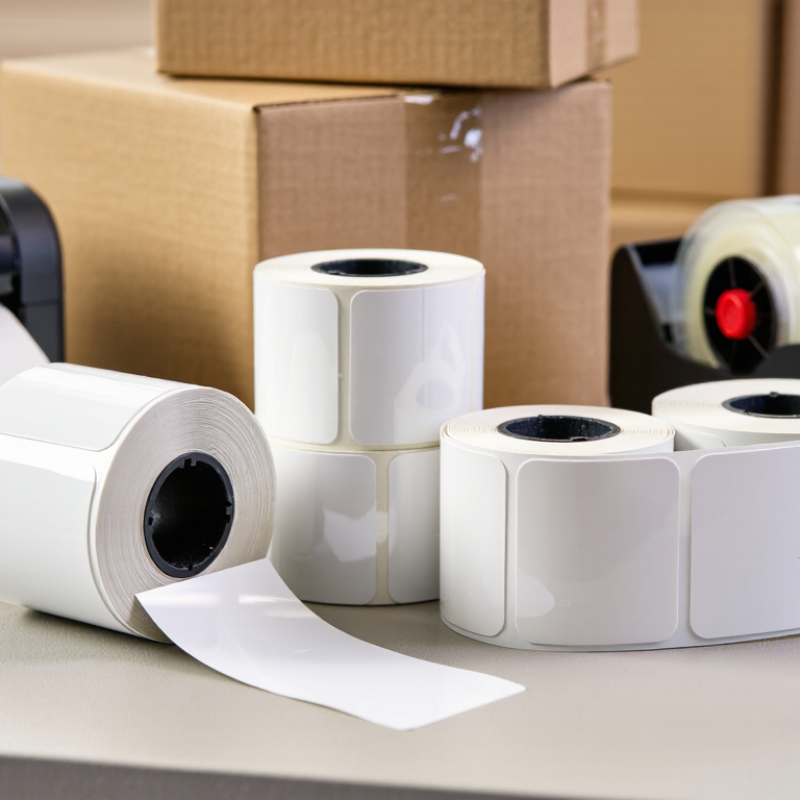
What 4×6 Thermal Labels Are and How They Work
A 4×6 thermal label measures four inches by six inches, giving a parcel label room for a large barcode, delivery details, and handling information. The size is common in shipping, but it is not a universal requirement for every carrier or printer. Check the carrier’s label specifications before printing. Small differences matter.
Thermal printers create text and barcodes using heat. Direct thermal labels have a heat-sensitive coating that darkens where the printhead touches; they need no ink or ribbon. Thermal-transfer printing instead uses a heated ribbon to transfer ink onto the label, which can suit labels exposed to more handling or longer storage. Both methods rely on a clean, correctly sized label and readable contrast. A smudge across the barcode can cause trouble.
The GS1 Logistics Label Guideline describes how logistics labels can carry shipment identifiers and barcode data, including a Serial Shipping Container Code (SSCC). That data helps link a physical parcel with information in shipping systems. Scale makes legibility practical, not cosmetic: Pitney Bowes’ 2023 Parcel Shipping Index estimated 161 billion parcels moved worldwide in 2022. In a busy packing area, test labels on the actual carton; curved surfaces, tape, and rough cardboard can affect scanning. A label may look sharp on screen and still print poorly. That distinction is easy to miss.
Direct Thermal and Thermal Transfer Label Types
For 4x6 shipping labels, the choice between direct thermal and thermal transfer depends on how long labels must remain readable. Direct thermal printers use heat to darken a coated label surface. No ribbon is needed. That keeps loading simple and reduces one supply to monitor. A printed test label can reveal whether small barcodes and address lines look sharp enough.
Direct thermal labels suit parcels that move through ordinary shipping networks and do not need years of storage. Their print may fade sooner when exposed to strong heat, sunlight, or repeated rubbing. A label left beside a sunny window can show the difference. It is easy to assume every shipment needs the toughest option. Often, that adds cost without helping the label do its job.
Thermal transfer printing uses a heated ribbon to transfer ink onto the label. With a compatible ribbon and label material, it can produce more durable images for long storage or rough handling. The extra ribbon means another supply to stock, and matching materials matters. Test a small batch before ordering in bulk; adhesion and print quality can vary with the package surface. Even a crisp label may wrinkle on a curved carton. Check the barcode after applying it, not just while it lies flat.
Key Materials, Adhesives, and Printer Compatibility
A 4x6 shipping label can look simple, but its face stock, adhesive, and printer settings determine whether it stays readable. Direct thermal stock darkens with heat from the printhead, so it needs no ink ribbon. It works well for routine parcels, though prolonged sunlight or warm storage can fade the image. Thermal transfer stock uses a ribbon and often holds up better against scuffs and handling. The extra supply is easy to overlook.
Adhesive choice matters just as much. Standard permanent adhesive suits clean corrugated boxes, while rough, recycled, or dusty surfaces may need a stronger bond. Cold packages can also challenge adhesion; apply labels to dry, room-temperature surfaces when possible. Printer compatibility is not guaranteed by label size alone. Check the printer’s supported roll or fanfold format, core size, maximum label width, and sensing method. A gap sensor may require labels with consistent spacing. Settings can need adjustment.
Tips: Run a short test batch before printing a full shipment. Check that barcodes are crisp, edges stay flat, and labels feed without skew. If a label peels at a corner, revisit the surface and adhesive choice rather than simply increasing print darkness.
Comparing Top 4×6 Labels for Shipping and Packaging
When comparing 4 × 6 shipping labels, start with printer compatibility, not price. Direct thermal labels print without ink or a ribbon, which keeps routine packing simple. Their images can fade sooner when exposed to heat, sunlight, or long storage. Short trips are different from months in a hot warehouse.
Surface finish matters. Standard thermal labels suit everyday parcels, while a protective top coating can help resist smudges and moisture during handling. It is not a guarantee against damage. Compare adhesive strength too: a firm bond works well on clean corrugated boxes, but may struggle on dusty, cold, or textured packaging. Small details matter.
Roll labels can speed up a busy packing station, especially when the printer accepts the core size and label gap. Fan-fold stacks may fit better where shelf space is limited. Check whether labels feed cleanly and separate without tearing. A quick test helps: print a barcode, rub it lightly, then press the label onto the actual box material. I would not judge a label by one perfect print; humidity and surface condition can change the result. A slightly cheaper roll can cost more in wasted prints.
How to Choose Labels for Different Shipping Needs
How to Choose Labels for Different Shipping Needs
A 4x6 thermal label provides space for an address, barcode, and handling information on one surface. Check your printer’s supported width, roll core, and feed style before ordering. A label can be the right size yet still fail to load properly. Test a short batch.
For high-volume parcels moving quickly through ordinary delivery conditions, direct thermal labels are often a practical choice because they need no ribbon. Their printed image can fade with heat, sunlight, or extended storage, though. For labels that must remain readable longer, thermal transfer printing uses a ribbon and may suit the job better. Match the label and ribbon to your printer.
Consider the package, too. Smooth cardboard usually accepts standard adhesive well, while dusty, cold, or slightly uneven surfaces may need a stronger adhesive. If parcels face moisture or rough handling, check the label material’s durability rather than relying on appearance alone. Small details matter.
Before committing to a large order, print a few labels and apply them to real cartons. Scan the barcode after the label has been handled and moved. It is tempting to choose the lowest cost per roll, but jams, peeling corners, or unreadable codes can create more work. The right specification may take a little testing.
Top 4×6 Thermal Labels for Shipping and Packaging
Compare common thermal-label dimensions to match the label format to the shipping task.
A 4×6-inch label is a versatile choice for parcel shipping because it provides room for an address, routing information, and a barcode. Smaller formats can suit compact identification needs, while larger labels offer more space for pallet or handling information. Confirm carrier and printer requirements before choosing a size; the examples shown are common formats, not universal requirements.