
1941 West Fort St

Detroit, MI 48216

313-496-0550

Mon - Fri 8:45 a - 4 p ET

Porter Bottle Company

How to Choose the Right Carry Out Box for Your Business

A takeout order travels through more than a few feet of kitchen. It may sit beneath a heat lamp, ride in a delivery bag, and cross a bumpy street before reaching the customer. The right Carry Out Box must protect the food while fitting your menu, workflow, and budget. Small details matter.

The National Restaurant Association’s 2024 State of the Restaurant Industry report highlights the ongoing importance of off-premises dining to restaurant operators. That makes packaging part of the customer experience, not merely a container. A box that traps steam can soften fried food; one that leaks may stain a customer’s car seat. Fit matters, too: an oversized box can let a sandwich slide, while a tight one can crush toppings. Test real menu items, not empty samples.

Waste deserves equal attention. The U.S. Environmental Protection Agency’s 2018 Facts and Figures report estimated that containers and packaging generated 82.2 million tons of municipal solid waste in the United States. This broad category includes far more than restaurant boxes, so it is not a direct measure of takeout packaging alone. Still, it is a useful reminder to consider material use and local disposal options. Not always simple. A recyclable label does not guarantee that a box will be accepted locally, especially when food residue is present. This guide will help compare materials, sizes, closures, ventilation, and cost per order. The best choice is usually the one your staff can pack consistently and customers can open without a struggle. It may take a few trial runs. That is part of choosing well.
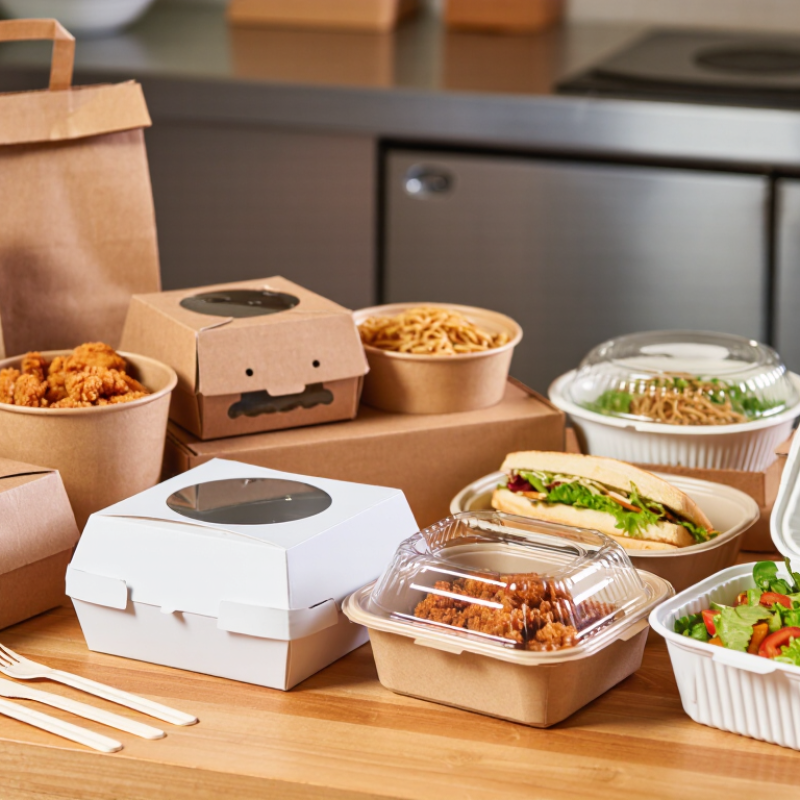
How to Choose the Right Carry Out Box for Your Business

Define Your Carry-Out Needs in the NRA’s Projected $1.1T U.S. Restaurant Market

The National Restaurant Association’s projected $1.1 trillion U.S. restaurant market signals a large opportunity, but it does not tell each operator what packaging to buy.

Start with your own carry-out orders. Are they mostly burgers, sauced noodles, crisp sides, or mixed meals? A hot sandwich trapped in a sealed box can turn soft before it reaches the customer. A container that fits a meal neatly can still fail if it leaks in a delivery bag.

Check how long food typically travels and how staff pack orders during a busy shift. Boxes should close securely, stack without crushing food, and open without a struggle. Venting can help preserve crisp textures, while compartments may keep sauces away from fries. Details matter. Compare the box size with real portions, not idealized menu photos.

No single box is likely to solve every menu problem, and the cheapest option may cost more if food arrives damaged. Test a few candidates with actual orders, then ask staff and customers what held up. One test is not proof; repeat it during a rush, when packing gets less careful.

Match Box Size and Compartments to Menu Portions and Order Mix

Choose a carry-out box around the food’s served portion, not the menu photograph. Test the actual meal. Measure the entrée after cooking, then leave lid clearance so toppings do not get crushed. The National Restaurant Association’s 2024 State of the Restaurant Industry report found that 47% of adults consider takeout or delivery essential to their lifestyle. That signals routine demand, not a reason to oversize every order. A sandwich may need a shallow container; a sauced rice bowl needs more depth and a secure lid. Too much empty space lets food shift. Not ideal.

Match compartments to what customers actually order together. Keep sauce, salad, and hot entrées apart when texture matters, but check that dividers do not crowd larger portions. Review a week of orders: note entrée sizes, common side combinations, and substitution requests. Then test the busiest combinations in candidate boxes, including a short delivery ride. Check for leaks, crushed edges, and trapped steam. My sizing assumptions can be wrong; a real packing test usually exposes them. The same Association report found that 70% of adults would order takeout more often if available. Use that as a reason to plan for varied orders, not to choose one box size for every meal.

How to Choose the Right Carry Out Box for Your Business - Match Box Size and Compartments to Menu Portions and Order Mix
Box Style Typical Interior Size Compartments Best-Fit Portion or Menu Items Useful for This Order Mix Selection Check
Small hinged clamshell About 6 × 6 in 1 Side salads, pastries, small sandwiches, or a single snack portion Small sides and individual add-ons Check that the food fits without crushing toppings or overfilling the lid.
Medium hinged clamshell About 8 × 8 in 1 Single sandwiches, burgers, rice bowls, or moderate entrées Single-item meals and compact lunch orders Allow room for the food’s height, sauces, and any garnish.
Large hinged clamshell About 9 × 9 in 1 Large entrées, generous portions, or meals with a substantial side Hearty single meals and larger portions Choose a larger base when food needs space to prevent compression.
Two-compartment meal box About 9 × 9 in 2 Main dish with one side, such as chicken with rice or a sandwich with fries Meals where a side should stay separate from the entrée Confirm each section is large enough for the usual portion split.
Three-compartment meal box About 9 × 9 in 3 Entrée with two sides, such as a protein, vegetables, and a starch Combo plates and meals with multiple components Review the divider layout against the menu; compartments are not always equal in size.
Rectangular entrée container About 9 × 6 in 1 Pasta, noodles, sliced meat, or longer foods that fit better in a rectangular base Single entrées and dishes that are awkward in a square box Compare the usable base area with the portion’s footprint before ordering.
Deep round bowl with lid About 7–8 in diameter; 24–32 fl oz capacity 1 Soups, curries, grain bowls, salads, or saucy dishes Liquid or mixed dishes that need extra depth Check lid fit and leak resistance; keep hot liquids upright during transport.
Small sauce cup with lid About 2–3 in diameter; 1–4 fl oz capacity 1 Dressing, dip, salsa, gravy, or condiment portions Orders with sauces served separately Match capacity to the standard serving and secure the lid before packing.

Sizes and capacities are typical examples and vary by container design. Test boxes with actual menu portions, lids, and delivery conditions before selecting a standard size.

Check Food-Contact Safety Under FDA Rules Before Choosing Materials

Choosing a carry-out box means checking more than size, strength, and appearance. The food-contact surface must be suitable for the food and conditions it will encounter. Under U.S. FDA rules, suitability can depend on the material, food type, temperature, and contact time. A box used for hot, oily noodles may need different evidence than one used for a cool pastry. Small details matter.

Ask the supplier for documentation identifying the material and its intended food-contact uses. Check that the stated compliance basis applies to your actual conditions, including hot filling, microwave heating, or long delivery times. FDA does not simply certify every box on the market; requirements can depend on the substance and its use. Ask for proof. If the box includes a coating, adhesive, or printed ink, confirm these components are appropriate for the intended use, especially near food-contact areas. Recycled content deserves a closer look, too: request clear information about its composition and suitability rather than relying on a general claim.

Run a practical trial with the foods you sell. Fill a sample box, let it sit for your typical service period, then check for leaks, soft spots, odors, or ink transfer. It is easy to overlook condensation or a greasy sauce during a quick inspection. Keep supplier statements and test notes on file, and revisit them if the recipe, serving temperature, or packaging design changes.

Match Food-Contact Materials to FDA Conditions of Use

FDA conditions of use describe the temperatures and other conditions a food-contact material is expected to encounter. A, C, and D are shown here as temperature thresholds; they are not universal material limits or proof that a material is authorized for a particular use. Check that the specific material’s applicable FDA authorization covers your food type, temperature, and use conditions.

Source: FDA food-contact Conditions of Use definitions. Values shown are threshold temperatures in °F.

Compare Disposal Options Against EPA’s 82.2M Tons of 2018 Packaging Waste

A carry-out box can protect a meal and still create a disposal problem. The scale is easy to miss. The U.S. EPA reported 82.2 million tons of containers and packaging in the U.S. waste stream in 2018. That figure covers many kinds of packaging, not takeout boxes alone. Still, it puts a single daily purchase in perspective: thousands of boxes can add up across a busy restaurant.

Compare options by what happens after the customer leaves. Paperboard may be recyclable where local programs accept food-soiled packaging, but grease and sauce can limit recovery. Compostable boxes need access to a facility that accepts them; the label alone does not guarantee composting. Reusable containers avoid single-use disposal, though washing, returns, and breakage require practical systems. There is no perfect box. Annoying, but true.

Test boxes with actual menu items. Leave a hot, saucy meal inside for the usual delivery time, then check for leaks, sogginess, and safe stacking. Ask local waste haulers what materials they collect, and verify whether nearby facilities accept them. A lighter box may use less material, yet fail if it spills and needs a second container. Track customer feedback and replacement rates for a few weeks. The best choice is the one that protects food while fitting the disposal options customers can actually reach.

Test Heat, Leaks, and Stackability, Then Compare Cost per Order

A box must protect the meal after it leaves the pass. Test it with the actual menu: fill it with hot soup, tilt it for several minutes, then check seams and corners for leaks. For fried food, note whether steam softens the lid or turns crisp edges soggy. The FDA Food Code 2022 sets hot holding at 135°F or above and cold holding at 41°F or below. These are food-holding limits, not packaging guarantees, so use a probe during realistic delivery trials. A tidy counter test can fool you. Add a bumpy route and a 20-minute wait.

Then test stackability with filled boxes, not empty samples. Load a short column, carry it, and inspect whether lower lids bow or sauces shift. ASTM D642 describes a compression test for shipping containers; it offers a useful framework for comparing box strength. EPA estimates that 66 million tons of food waste arose across U.S. retail, food service, and households in 2019. A sturdy box cannot solve food waste, but preventing spills is a practical step. Compare total packaging cost per successful order, including lids, liners, rejected meals, and storage space. The cheapest unit may cost more in service. Record results across several shifts; one unusually gentle delivery tells you little.

Scroll to Top