How to Choose the Best Wrapping Machine for Your Business?
Choosing the best wrapping machine for your business starts with the packages you handle every day. A small food producer wrapping cartons has different needs from a warehouse securing large pallets. Package size, shape, weight, and daily volume all influence the right choice. So does the wrapping material. A machine must suit the film or other approved material your operation already uses.
A search for “Wraping Machine” may bring up many models, but a long feature list does not guarantee a good fit. Look at realistic throughput, adjustment time, floor space, and operator training. Picture a busy shift: packages arrive at uneven intervals, a film roll needs changing, and staff must clear the finished goods. Can the machine keep pace without making the workflow harder? Ask suppliers for demonstrations using packages similar to yours. Check what maintenance, spare parts, and technical support are included.
Cost matters. So does downtime. Compare the purchase price with expected operating and service costs, rather than judging by price alone. A very fast model may be unnecessary for a modest production line, while an undersized machine can create a daily bottleneck. No single specification tells the whole story. Your figures may also be incomplete; that is worth admitting before you buy. Track current output, packaging variation, and stoppages for several weeks if possible. With those details, you can compare options more reliably and choose a wrapping machine that fits your actual operation, not just the sales brochure.
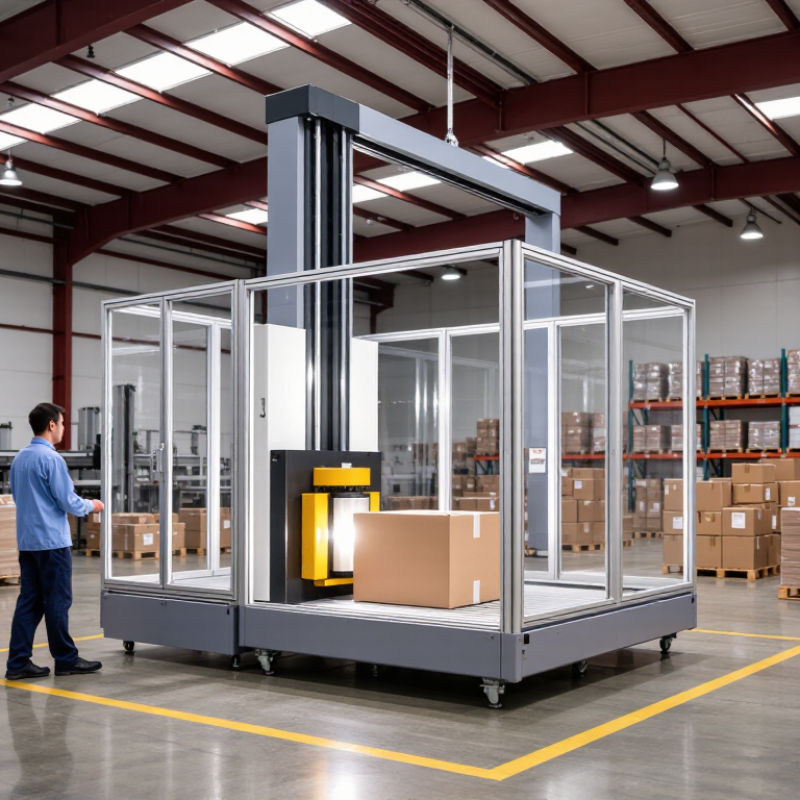
Define Your Products and Wrapping Requirements
Start with the products, not the machine. Measure their length, width, and height, including handles, lids, or other protruding parts. Record the smallest and largest items, since a machine suited to one carton may struggle with another. Weigh each product and note whether it is rigid, soft, fragile, or irregularly shaped. Small details matter. A sharp corner can puncture film, while a loose-fitting wrap may shift during handling. Also consider how products arrive at the wrapping station: individually, in trays, or grouped into multipacks.
Next, define what the wrapping process must achieve. Estimate average and peak output per hour, and note how often product sizes change during a shift. Decide whether the package needs dust protection, a tight presentation, or easy opening. Specify the wrap material and any limits on heat exposure, especially for sensitive products. A quick trial with actual products can reveal problems that measurements miss, such as film bunching around a curved edge. This part is easy to underestimate. Keep a record of trial settings and rejected packages; early assumptions may need revision once the line runs at its normal pace.
How to Choose the Best Wrapping Machine for Your Business?
Define Your Products and Wrapping Requirements
Film-width estimates use sample product cross-sections and the formula 2 × (width + height) + 25 mm for a nominal seal allowance. These are planning examples, not universal product specifications. Confirm actual dimensions, orientation, seal style, and film requirements with your machine supplier before selecting equipment.
Compare Wrapping Machine Types and Their Uses
How to Choose the Best Wrapping Machine for Your Business?
Compare Wrapping Machine Types and Their Uses
Stretch wrappers secure pallet loads with stretch film, making them useful for warehouses shipping heavy or mixed cartons. Shrink wrappers bundle products in a tight film, often for retail multipacks; they need a heat source and suitable ventilation. Flow wrappers enclose individual items, such as bars or small hardware, in a horizontal film pouch. For long products like pipes or lumber, orbital wrappers apply film around a stationary load. Different jobs, different machines.
PMMI’s 2023 State of the Industry report valued U.S. packaging machinery shipments at $10.9 billion in 2022, reflecting a substantial equipment market. That figure does not identify the right wrapper for your line. Compare your product dimensions, load stability, daily volume, and changeover frequency. A fast machine may still cause delays if workers struggle to adjust guides between carton sizes. Measure actual production, not just the ideal shift.
Tips: Test several real products before buying. Check film use, operator access, and changeover time. Ask for a trial with your least cooperative load; neat samples can hide problems.
Match Machine Capacity to Production Demands
Match a wrapping machine’s capacity to your real hourly demand, not its headline speed.
Calculate peak orders per hour, then include product changes, film loading, breaks, and planned cleaning. A line rated at 30 packs per minute will not deliver 1,800 saleable packs every hour. Vorne’s OEE guidance cites 85% as a world-class benchmark and says many manufacturers run near 60%. OEE combines availability, performance, and quality; it is a planning reference, not a promise for your line. If your operation has no measured OEE yet, track good packs against scheduled production time for several shifts.
Check the full operating range. A machine may wrap small cartons quickly but slow down on tall, unstable, or mixed-size loads. Ask suppliers to test your actual products and film, then record changeover time and reject rates. Leave room for seasonal peaks, but avoid paying for capacity that sits idle. This part is easy to misjudge.
Tips: Compare required output with demonstrated good packs per hour, not rated cycles per minute. Add a modest capacity buffer based on your own demand data, and confirm that upstream and downstream equipment can keep pace. Revisit the calculation after product sizes or shift patterns change. A spreadsheet can still be wrong.
Evaluate Costs, Space, Safety, and Maintenance
A wrapping machine’s purchase price is only part of its cost. Compare film use, changeover time, power consumption, and service expenses over several years. The U.S. Energy Information Administration reported average industrial electricity prices of about 8 cents per kilowatt-hour in 2023. Use your own utility bill and expected run hours for a better estimate. One estimate can still miss.
Measure the full working area, not just the machine’s footprint. Leave room for film rolls, pallet movement, cleaning, and access to controls. A compact unit may look ideal until an operator has to squeeze past a loaded pallet. I would mark the proposed layout on the floor before ordering; it is a simple check, but easy to skip.
Safety and maintenance deserve equal attention. The U.S. Bureau of Labor Statistics reported 2.8 recordable injury and illness cases per 100 full-time workers in manufacturing in 2023; that figure is not specific to wrapping equipment, but it reinforces the need to assess job hazards. Check guarding, emergency stops, and safe access during film changes. Ask how often routine service is needed, which parts require replacement, and whether your team can handle basic adjustments. Downtime estimates are imperfect, so leave room in the plan.
Test Packaging Compatibility Before Making a Selection
A wrapping machine should be tested with the products and packaging materials it will handle every day. Bring representative items, including the smallest pack, the heaviest one, and products with uneven shapes. Measure their dimensions, then run them using the film or wrap you plan to purchase. A sample that looks suitable on a desk may stretch, wrinkle, or tear at operating speed.
Watch the full cycle. Check whether the film feeds smoothly, stays tight around corners, and seals without scorching or opening. Note the settings, line speed, and any damaged packs. Keep the test boring. Repeat it with several units, not just one perfect sample. If products vary by batch, include those differences; a machine that works only under ideal conditions may create daily delays.
Ask the supplier to test your actual materials and document the results before you choose a machine. Small changes in film thickness or surface texture can affect performance. Also check changeover time if you package different sizes. One awkward product may slow the whole line. That is easy to overlook, and a test can still miss real production variation, so leave room for adjustment after installation.